We are ISO certified
Cold Storage Company
We are ISO certified
Cold Storage Company
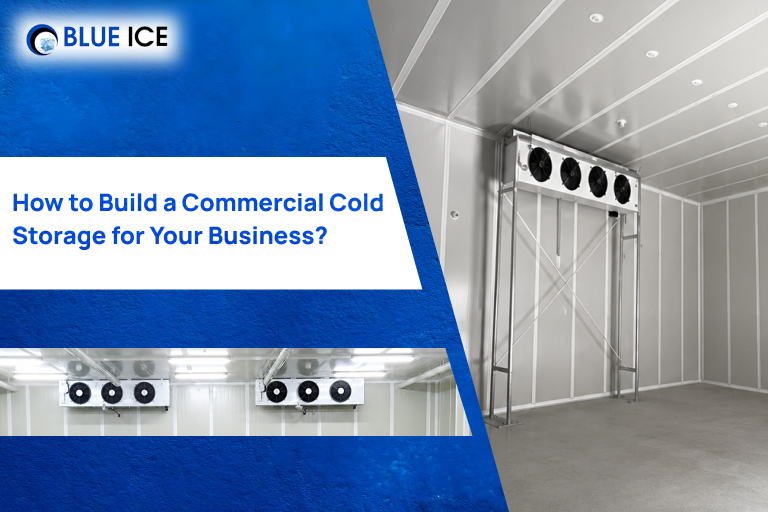
If you are a business owner who deals with perishable goods, building a commercial cold storage facility is one of the smartest investments you can make. Whether you are in food processing, agriculture, pharmaceuticals, or logistics, a well-built commercial cold storage unit protects your products, reduces spoilage, and keeps your supply chain running smoothly.
This guide walks you through everything you need to know, from choosing the right type to construction essentials and smart technology.
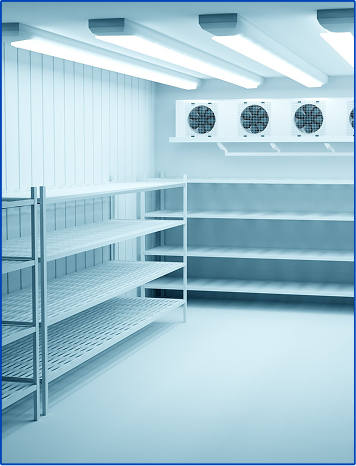
Think of commercial cold storage as a giant refrigerator built for businesses. It is a temperature-controlled facility designed to store large quantities of perishable goods, such as fruits, vegetables, dairy, meat, seafood, medicines, and more, for days, weeks, or even months without spoilage.
Unlike a regular home fridge, a commercial cold storage unit is engineered for scale, precision, and continuous operation. It maintains specific temperature and humidity levels around the clock to keep products fresh and safe. Businesses use it to reduce waste, extend shelf life, and ensure a steady supply of goods throughout the year.
Not every business needs a cold storage unit, but many do, and they haven’t even realized it yet.
Basically, if your product spoils at room temperature, you need a commercial cold storage solution. So there are many other industries where a cold storage unit is required that we have not mentioned here.
Before you start construction, you need to decide what kind of facility suits your business. Each type serves a different purpose.
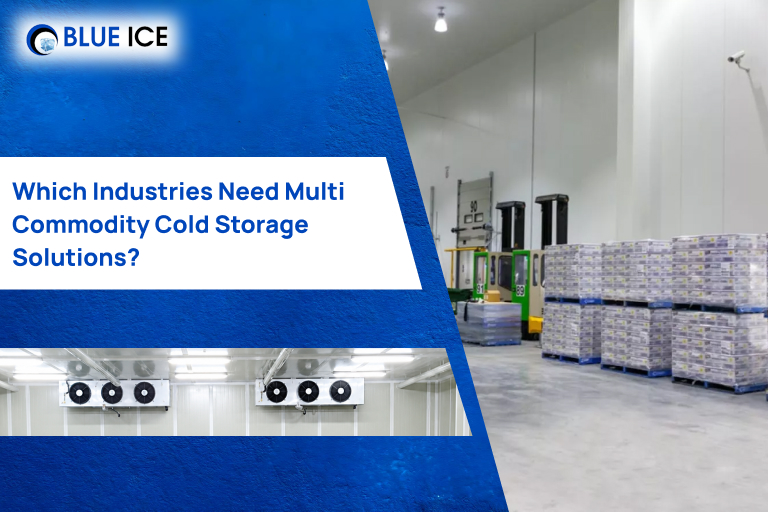
These are large-scale facilities designed to store massive quantities of a single or multiple commodities at a consistent temperature. They are ideal for agricultural produce, grains, and processed foods. Multi commodity cold storage warehouses are a popular choice for businesses that handle different types of products under one roof.
These units rapidly bring down the temperature of freshly processed food or pharmaceutical products. They are critical in industries where quick freezing preserves quality, texture, and nutritional value. They work faster than standard cold rooms and are usually built alongside a main storage unit.
CA rooms go beyond just lowering temperature, as they also regulate oxygen, carbon dioxide, and nitrogen levels inside the room. Such a commercial cold storage facility is ideal for storing fruits like apples, pears, and pomegranates for extended periods without losing freshness or quality.
These are highly specialized rooms built to maintain the strict temperature ranges required by medicines, vaccines, and lab samples. They follow stringent regulatory standards and require precision equipment and backup systems.
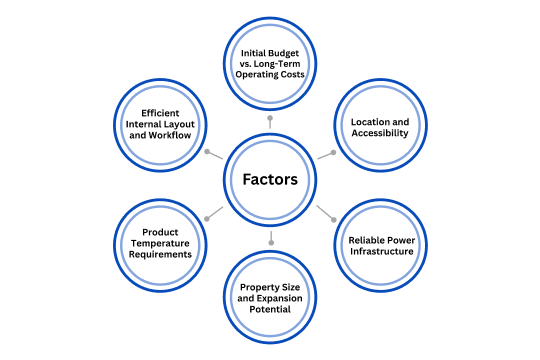
Planning is everything when it comes to cold storage construction. Skipping this stage is one of the most common and costly mistakes businesses make. Here are some of the factors you need to keep in mind while building a cold storage facility:
Your facility should be close to production or supply sources and easily accessible for transport vehicles. Poor road access increases logistics costs and product handling time.
Cold storage runs on power continuously. You need a stable electricity supply with backup generators and voltage stabilizers. Any power failure, even for a few hours, can compromise the quality of stored goods.
Think not just about today’s storage needs, but where your business will be in five years. Build on land that allows room for expansion so you don’t have to start over later.
Different products need different temperatures. Fruits may need 0–4°C, frozen meat may need -18°C or lower, and pharmaceuticals may require even more precise control. Knowing your temperature range upfront determines the equipment and insulation you need.
How goods enter, move within, and exit the facility matters. A poorly designed layout increases handling time and the risk of temperature fluctuations during loading and unloading.
A cheap build often leads to higher energy bills and maintenance costs. Investing in quality insulation and efficient refrigeration upfront saves significantly in the long run.
A commercial cold storage building is only as good as the engineering behind it. These five elements are non-negotiable:
PUF (Polyurethane Foam) panels are the industry standard for cold room walls, ceilings, and floors. They prevent heat transfer and maintain internal temperatures efficiently. Thickness and density of insulation should match the temperature requirements of your products.
Cold storage floors bear heavy loads from forklifts, pallets, and machinery. They also need to be insulated, moisture-resistant, and slip-proof. If the flooring is not done properly, it could lead to structural failure and safety hazards.
Proper airflow ensures even temperature distribution throughout the storage space. Without it, hot spots form, and products stored in those zones get damaged. Strategically placed evaporators and air circulation fans solve this problem.
Temperature alone is not enough. Humidity needs to be managed carefully. Too high humidity causes mold and condensation, and too low humidity causes dehydration of produce. High relative humidity storage is important for fresh fruits and vegetables, while low humidity suits certain dry commodities.
What happens when the main refrigeration unit fails? Emergency backup compressors, automated alarms, and remote monitoring systems ensure that any failure is caught quickly and addressed before losses increase.
Modern commercial cold storage facilities use IoT-based temperature and humidity sensors that provide real-time data on your phone or computer. Automated alerts, data logging, and remote access help you stay in control even when you are not physically present at the facility.
In India, cold storage facilities must comply with guidelines set by the National Horticulture Board, FSSAI food safety norms, and local municipal building regulations. Pharma cold rooms additionally need to meet WHO-GMP or Schedule M standards. Using environment-friendly refrigerants is increasingly mandatory as regulations tighten around greenhouse gas emissions.
One of the biggest causes of cold storage failure is equipment breakdown. To prevent equipment breakdowns, businesses follow a traditional maintenance schedule or perform maintenance only when there is an urgent need.
AI changes this scenario. By analysing data from compressors, fans and refrigeration units, AI systems can predict when a component is likely to fail and flag it before any damage occurs. This is becoming a standard feature in well-designed cold storage projects across India.

Building a commercial cold storage facility is a long-term commitment, and the partner you choose matters as much as the design itself. We at Blue Ice India have been one of the most trusted cold storage room manufacturers in Gujarat for decades.
We have designed and built cold storage solutions across food processing, pharmaceuticals, agriculture, dairy, and logistics. As one of the leading cold storage manufacturers in Ahmedabad, we bring real-world experience to every project. Our portfolio includes multi-commodity cold storage warehouses, controlled atmosphere chambers, blast freezers, ripening chambers, and more.
Every business has unique requirements. That’s why Blue Ice India offers complete turnkey solutions, from feasibility studies and layout design to equipment selection, installation, and commissioning. As one of the best cold storage manufacturers in India, we do not believe in one-size-fits-all. Every project is engineered to match your specific product, volume, and temperature needs.
Our equipment is built to be energy-efficient. We use high-quality PUF panels, precision refrigeration units, and modern compressor technologies that keep running costs low without sacrificing performance.
Our relationship with clients does not end at handover. Blue Ice India provides ongoing maintenance, emergency support, and service contracts to ensure your commercial cold storage facility runs without interruption. Being one of the most responsive cold storage manufacturers in India means we are always available when it matters.
Learn how to evaluate quality, expertise, and long-term reliability in our article, How to Choose the Right Cold Storage Manufacturer.
Building a commercial cold storage is not just a construction project, but a strategic business decision too. From choosing the right type and location to getting the insulation, airflow, and technology right, every detail counts. If you want it done correctly the first time, partner with experienced cold storage manufacturers in India, like Blue Ice India, who understand the science and the business.
Kalpesh Bhuva, CEO of Blue Ice India, brings over 25 years of expertise in refrigeration and cold chain solutions. He specializes in cold storage, modular cold rooms, multi commodity cold storage, ripening chambers, pharma facilities, and more. His vision focuses on innovation, quality, and advancing sustainable, locally manufactured cold storage technologies across India.

Queries
Industries like food processing, agriculture, pharmaceuticals, dairy, seafood, ice cream manufacturing, and logistics commonly need cold storage to preserve perishable goods.
If your products lose quality, safety, or value when stored at room temperature, you likely need a cold storage solution.
It’s a large-scale facility designed to store different types of products under one roof, each maintained at appropriate temperatures.
Proximity to production or supply sources reduces logistics costs and handling time, while good road access ensures smooth movement of transport vehicles.
IoT-based temperature and humidity sensors, real-time data monitoring on phones or computers, automated alerts, and data logging are now widely used.