We are ISO certified
Cold Storage Company
We are ISO certified
Cold Storage Company
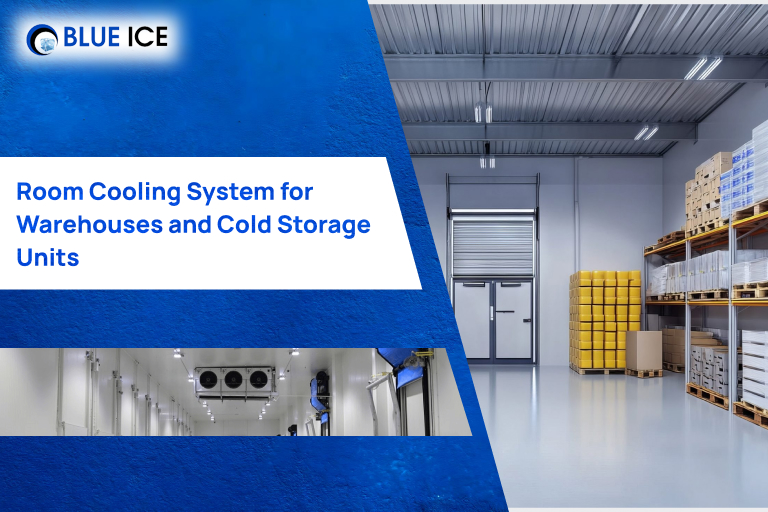
In modern supply chain operations, temperature control is treated as an essential requirement rather than just a convenient option.
Whether it is about preserving life-saving pharmaceutical drugs or ensuring that farm produce reaches the dinner-table still fresh, a robust room cooling system and cold rooms improve food safety is the backbone of the logistics industry.
For any cold storage business, it is important to choose the right infrastructure if we are expecting high profitability and less product loss.
This article gives a detailed view of the essential components of modern room cooling solutions, the technologies improving the efficiency and how leading cold storage manufacturers are reshaping the industry.
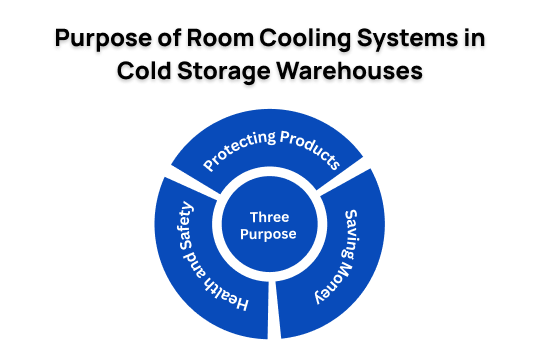
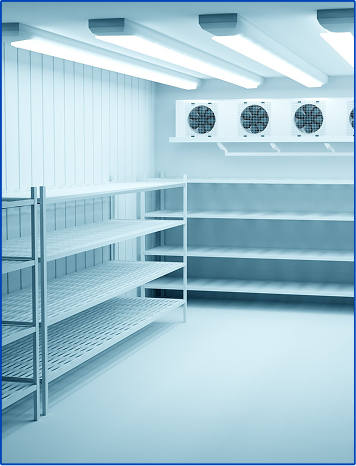
The main purpose of a warehouse cooling system is to create a stable and controlled, low-temperature environment.
This system is more than just lowering the temperature of an enclosed space, because it also allows us to manage humidity, airflow and heat infiltration.
Different goods require specific thermal zones. A high-quality room cooling system helps to protect sensitive items from “temperature excursions.”
For example, a pre-cooling room is used to rapidly remove field heat from freshly harvested fruits and vegetables. This process effectively slows down the ripening, resulting in less spoilage.
The key factor that influences the profit of companies in the cold storage business depends on the facility they use to maintain low temperatures.
By maintaining a consistent low temperature, companies can easily reduce spoilage, which ultimately results in more profit.
In addition, a smartly designed cooling system prevents overworking of the cooling units, which reduces power consumption and prevents premature equipment failure.
In India, health authorities have created strict regulations on cold storage facilities. Proper cooling systems stop the growth of harmful bacteria and mold.
The professional cold storage business is required to maintain precise digital temperature records because these data serve as proof that their products were stored at a safe temperature for human consumption.
There are various types of room cooling systems available in the market. So, different room cooling and cold storage solutions are used, depending on the size of the facility and the type of products that are going to be stored there.
Here are some of the common types of room cooling systems used:
A centralized system uses a large, single refrigeration plant to distribute cooling to various rooms.
The system operates with high efficiency across extensive areas but needs specialized engineers to handle its design and requires businesses to pay substantial costs for its first setup. Generally, they are installed in large-scale industrial warehouses.
Split systems are used in smaller cold rooms or in selected partitioned areas of large warehouses.
The particular room cooling system consists of an indoor evaporator and an outdoor condensing unit.
They offer excellent flexibility, like zoned temperature control, and they are a good fit for specialized, smaller-scale storage needs.
The evaporative cooling method serves as a budget-friendly solution for regions where we experience a dry climate.
The system works on the natural process of water evaporation to cool down the air. While this system is not suitable for sub-zero freezing, it works well for ambient warehouses, where we store dry and electronic goods at room temperature.
Blast freezers are used for those products that need to be frozen instantly to preserve their texture and nutrients.
The units use their powerful cold air system to drop the temperature of products to -30°C or lower within a couple of hours.
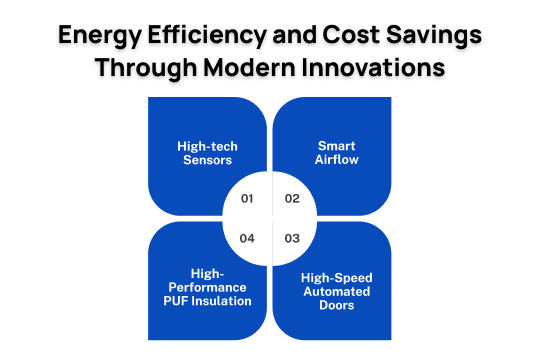
Along with providing the facility of achieving low temperatures, modern innovations in the room cooling solutions are also about energy efficiency, cost savings and environmental sustainability. Here are some key innovations of the energy-efficiency cooling systems:
Managers can use their smartphones to track their facility operations through IoT-enabled sensors.
These sensors can detect a 1-degree shift or a door left open, so that they can make immediate adjustments and prevent energy waste.
Due to its low density, warm air rises in the facility and creates uneven temperatures at the bottom and ceiling of warehouses.
This results in overworking of the cooling fans to maintain the low temperature. But, High-Volume Low-Speed (HVLS) fans maintain constant temperature distribution from the floor to the rafters, which prevents overworking of cooling units.
The quality of walls is just as important as the quality of the cooling unit itself. Polyurethane Foam (PUF) panels provide the highest thermal resistance (R-value).
The panels block heat, which ensures that the room cooling system doesn’t have to work 24/7 to maintain a particular temperature.
Every door opening creates an escape path for cold air. High-speed automated doors minimize this “infiltration load” by opening and closing in seconds. This keeps the internal environment sealed and stable.
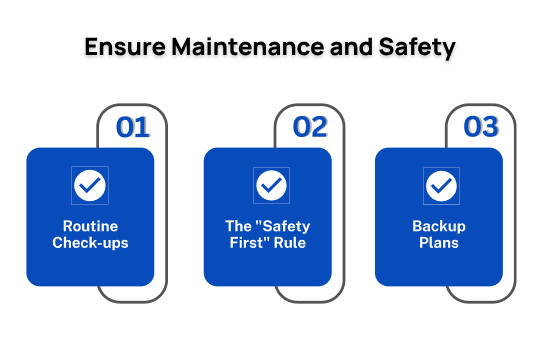
The cooling system functions as a primary unit of the cold storage facility which requires continuous operation. To maintain its proper functioning, the system requires a strict maintenance schedule.
We stand as one of the premier cold storage manufacturers in Ahmedabad through its specialized engineering capabilities.
Their extensive knowledge of Indian weather conditions and industrial environments enables them to create complete business solutions for customers.
This cold storage manufacturer offers advanced technology solutions to clients who require a pre-cooling room for agricultural produce, pharmaceuticals, dairy, meats, etc.
Blue Ice India produces high-quality PUF panels and energy-efficient refrigeration systems and it also handles complete project development through its services.
With us, you get the industry experts who will not only help you to build a cold storage facility, but they will also help you know which room cooling system would be best for you as per your business, what industry standards you have to maintain and what needs to be done to keep your facility’s maintenance and safety under check.
One of the most critical choices for warehouse operators to make is choosing an effective room cooling system.
From installing smart sensors to using the right insulation material, every choice impacts your cold storage business’s product safety and energy efficiency.
We guarantee that your cold storage facility will operate with cost-efficiency while achieving global cold chain logistics standards.
Kalpesh Bhuva, CEO of Blue Ice India, brings over 25 years of expertise in refrigeration and cold chain solutions. He specializes in cold storage, modular cold rooms, multi commodity cold storage, ripening chambers, pharma facilities, and more. His vision focuses on innovation, quality, and advancing sustainable, locally manufactured cold storage technologies across India.

Queries
A room cooling system is a refrigeration setup that maintains controlled temperature, humidity, and airflow in warehouses or cold rooms to preserve perishable and temperature-sensitive products.
The best system depends on storage size and products. Centralized systems suit large facilities, while split systems and blast freezers are ideal for smaller zones or rapid freezing needs.
By maintaining stable low temperatures and proper humidity, cooling systems slow bacterial growth and spoilage, keeping food, pharma, and dairy products fresh for longer periods.
Yes. Advanced systems use IoT sensors, PUF insulation panels, smart airflow, and automated doors to reduce energy consumption and lower operating costs.
Regular maintenance ensures stable temperature control, prevents equipment failure, improves safety, and avoids product loss due to unexpected breakdowns or power issues.