We are ISO certified
Cold Storage Company
We are ISO certified
Cold Storage Company
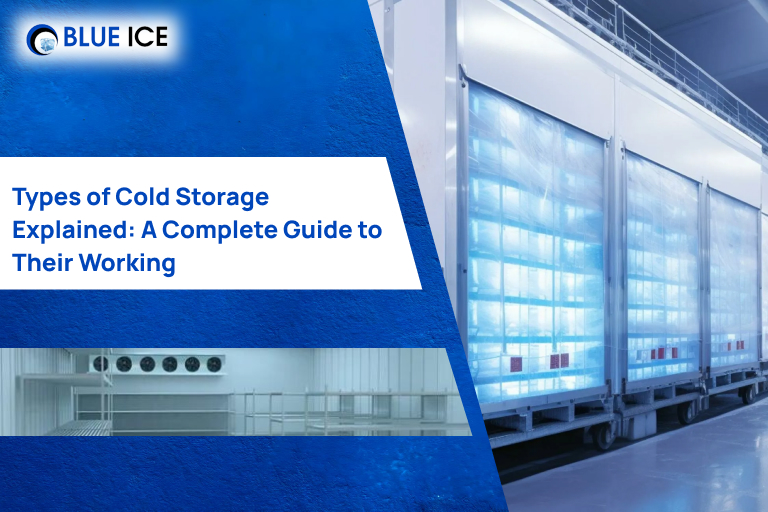
Cold storage keeps food, medicine, and other perishable goods fresh long after they would normally spoil. If you deal in fruits, vegetables, dairy, seafood, or pharmaceuticals, you have probably asked what is cold storage and how it can cut your losses.
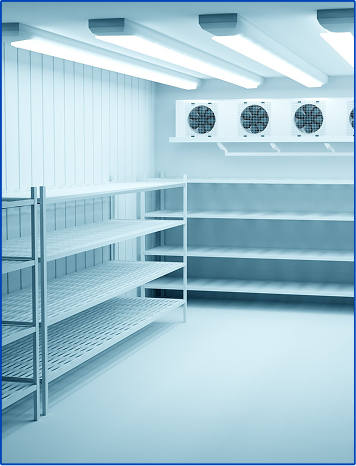
In simple terms, cold storage is a temperature-controlled space that slows spoilage by keeping products at the right cold level, from mild chilling to deep freezing.
This guide covers how a cold storage unit works, the main types of cold storage available, and how to pick the right cold storage facility for your business.
At its core, cold storage is a controlled environment that keeps perishable goods at a temperature low enough to slow bacterial growth and enzyme activity. Without it, fruits ripen too fast, vegetables wilt, dairy turns sour, and medicines lose their potency.
For Indian businesses, especially in states like Gujarat where summer temperatures often cross 40°C, a reliable cold storage room is a survival tool. It protects farmers’ income, reduces food waste, and helps exporters meet strict quality standards.
Every cold storage facility, no matter its size, depends on a handful of core machines working together.
The compressor is the heart of any cold storage equipment setup. It pressurises the refrigerant gas so heat can be released outside the chamber. A well-sized compressor keeps energy bills predictable and holds a steady temperature even during peak summer loads.
The condenser releases the heat absorbed by the refrigerant into the outside air, while the evaporator inside the room absorbs heat from the stored products. Together, they form a continuous loop that keeps the internal atmosphere stable around the clock.
Not every product needs the same kind of cold. Here are the main types of cold storage used across the Indian industry today.
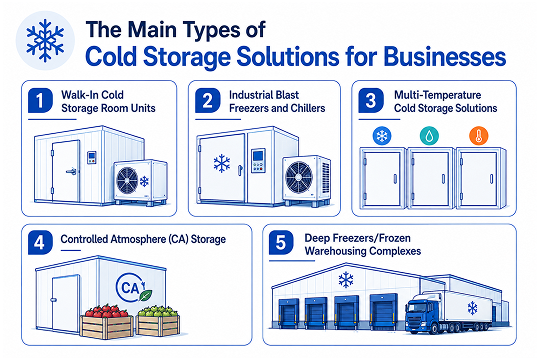
These are the most common cold storage room setups, built for businesses needing flexible, mid-sized chilled or frozen space, such as restaurants, small food processors, and local distributors.
Blast freezers drop the temperature of a product extremely fast, which locks in freshness and texture far better than slow freezing. This is essential for seafood, meat, and ready-to-eat food exporters.
Some warehouses need to store several product categories at once, each requiring a different temperature zone. Multi-temperature cold storage solutions divide one facility into separate compartments, saving space and construction costs.
Controlled Atmosphere (CA) storage goes beyond temperature control. It also manages oxygen, carbon dioxide, and humidity levels inside the chamber, which is ideal for long-term apple, pomegranate, and grape storage.
For bulk frozen goods like processed meat, ice cream, and frozen vegetables, large frozen warehousing complexes offer high-capacity, long-duration storage with strict temperature discipline.
For a deeper understanding of cold storage planning, read our Cold Storage Warehouse: Complete Guide to Design, Cost, and Operations in India and learn how to optimize design, budgeting, and daily operations.

Different produce needs different ranges, like potatoes need higher temperatures than frozen meat. Matching the right cold storage unit to your product range is the first, most important decision.
Too much humidity encourages mould; too little dries out produce. A dependable humidity-control system keeps moisture at the level your commodity requires.
Since cooling runs 24×7, insulation quality directly decides your electricity bill. Thicker, higher-density PUF panels and efficient compressors lower running costs by a noticeable margin every month.
Blue Ice India is an Ahmedabad-based company that builds cold storage solutions for food, pharma, dairy, and agri-export businesses across India and Nepal.
Over 25 years, Blue Ice India has learned that the biggest recurring challenge is when summer heat pushes compressors far harder than manufacturers in cooler climates plan for.
We also regularly solve the multi-commodity air leakage problem, where poorly sealed doors and mismatched panel joints let warm air sneak in each time a chamber opens, quietly raising costs across a facility storing several products together.
From site assessment and design to fabrication, installation, and after-sales AMC support, the Blue Ice India team handles every stage of your project as one accountable company. This means you deal with a single point of contact from the first site visit through to commissioning, instead of coordinating separately with contractors, panel suppliers, and refrigeration vendors.
Our in-house teams also carry out routine maintenance visits after handover, so small issues get caught before they turn into costly downtime.
We use high-density PUF insulation and inverter-driven compressors, and the math is simple: better insulation means the compressor works less, so you pay less on your power bill every month.
Blue Ice India is ISO 9001:2015 certified, and businesses across food, pharma, dairy, and horticulture sectors in Gujarat, Rajasthan, UP, Assam, and Nepal trust our cold storage equipment.
For a successful cold storage project, read How to Choose the Right Cold Storage Manufacturer and understand the key factors to evaluate.
Choosing the right cold storage is not just about buying a machine. It is about matching temperature range, humidity control, and insulation quality to what your business stores. Whether you need a simple cold storage room or a full multi-temperature warehouse, getting the fundamentals right saves money and protects your product every day.