We are ISO certified
Cold Storage Company

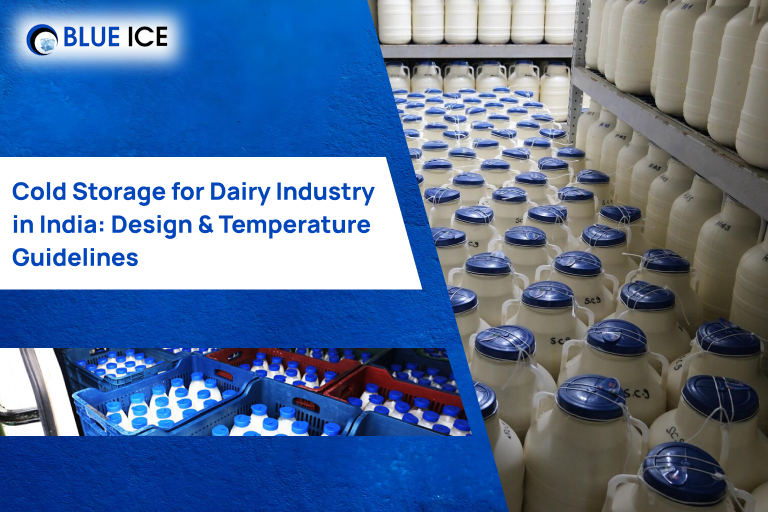

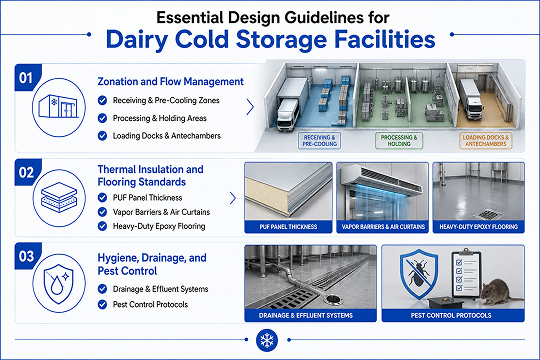
Dairy products move through several stages before reaching the consumer, and each stage needs its own temperature-controlled zone to avoid cross-contamination and temperature spikes.
Fresh milk arrives warm from the farm and needs quick cooling. A dedicated pre-cooling zone brings the temperature down before the product enters main storage, slowing bacterial growth right at the entry point.
Once cooled, milk and other products move to processing and holding areas kept at strict, stable temperatures so pasteurization, packaging, and batching happen without any quality loss.
Antechambers buffer the cold room from outside heat, preventing warm air from rushing in every time a door opens. Such a small design detail makes a big difference to energy use and product safety.
The building envelope of a dairy cold room decides how efficiently it holds temperature over the years.
Polyurethane foam (PUF) panels, typically 80mm to 150mm depending on storage temperature, form the insulation backbone of a dairy cold room and reduce energy loss significantly.
Vapor barriers stop moisture from seeping into insulation and weakening it over time, while air curtains at entry points cut down temperature fluctuation whenever staff move in and out.
Dairy floors deal with constant moisture, cleaning chemicals, and heavy trolley movement. Epoxy flooring resists cracking, sanitizes easily, and prevents bacterial buildup in floor joints.
Proper slope and drainage channels remove wash water and spillage quickly, preventing standing moisture that can lead to mould or bacterial growth.
Sealed panel joints, insect-proof door seals, and regular pest audits keep rodents and insects away from stored dairy products. Following such pest control protocols is a non-negotiable requirement under Indian food safety regulations, and cold room manufacturers can help to achieve them.
Different dairy products need different temperature ranges, and getting this wrong is one of the costliest mistakes in cold storage.
Target Temperature: 2°C to 4°C
Key Consideration: Milk should be cooled within two hours of collection to slow bacterial growth and maintain freshness.
Butter/Ghee: Best stored between -2°C and 4°C, since ghee stays stable at slightly higher temperatures than butter.
Fresh Paneer & Curd: Need consistent refrigeration at 2°C to 5°C, as both are highly perishable and sensitive to temperature swings.
Hardening Rooms: Operate at -30°C to -35°C to freeze the product quickly and lock in texture.
Storage Chambers: Maintained at -18°C to -22°C for long-term storage without ice crystal formation.
Target Range: 4°C to 13°C with controlled humidity, letting enzymes and cultures develop flavour safely over weeks or months.
Running a dairy cold room 24×7 is expensive, so energy efficiency is a major priority for any serious cold storage manufacturer today.
Ammonia systems are energy-efficient and common in large dairy plants, Freon-based systems suit smaller facilities at lower cost, and CO2 systems are gaining ground for their low environmental impact.
IoT-based sensors, automated defrost cycles, and real-time temperature alerts help dairy businesses catch problems before they cause spoilage, cutting down manual monitoring effort. This kind of automation is now a hallmark of forward-looking cold storage manufacturers.
The best cold storage manufacturers combine engineering expertise with an understanding of dairy-specific compliance needs, from FSSAI norms to HACCP-aligned hygiene design, rather than offering a one-size-fits-all cold room.
When it comes to choosing among cold room manufacturers in India, we believe dairy-specific experience makes all the difference, and that’s the foundation of what we do at Blue Ice India.
We have spent years designing and installing cold storage systems across Gujarat, working closely with dairies and food processors to understand exactly what dairy cold storage demands in Indian conditions.
Every dairy is different, so we design each facility around the client’s product mix, throughput, and layout, rather than offering a generic template. As one of the trusted cold storage manufacturers in India, our approach starts with understanding the operation, not just the square footage.
Our support doesn’t end at installation. As a company, we offer ongoing maintenance, temperature audits, and rapid response service, so our dairy clients can focus on their product while we take care of their cold chain.
Dairy cold storage is a science of zones, materials, and precise temperatures, and getting it right protects both product quality and business reputation. Whether you’re setting up a new facility or upgrading an old one, working with dependable cold storage manufacturers who understand dairy-specific needs is the smartest first step.
If you’re evaluating cold storage manufacturers for your next dairy project, we at Blue Ice India would be glad to help you build a facility around your exact requirements.