We are ISO certified
Cold Storage Company
We are ISO certified
Cold Storage Company
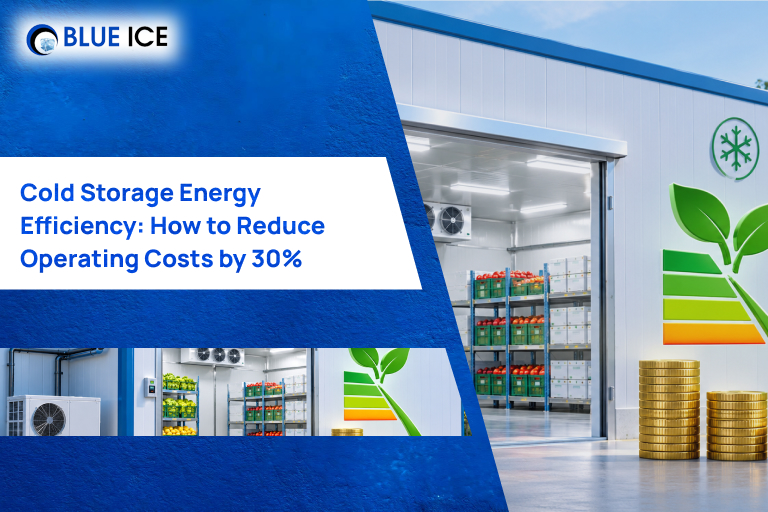
Cold storage room manufacturers often hear the same worry from owners: the power bill is too high. Cold storage energy efficiency is the best answer to this problem, because electricity is usually the biggest running expense of any facility.
The good news is that most savings come from simple choices in design, equipment, and daily habits.
In this guide, we explain where the power goes, how much you can save, and which steps give the best results. We also share common mistakes to avoid, so your facility stays cool without burning cash.
The refrigeration system is the biggest user of power. Compressors run for long hours, and condenser and evaporator fans run with them. Defrost heaters, lighting, and door heaters in freezers add to the load.
Heat entering through walls, doors, and gaps forces all this equipment to work harder. That is why experienced cold storage room manufacturers look at insulation and refrigeration together when they plan a project.
Industry practice is to study the refrigeration load first, because it drives the largest share of your cold storage electricity cost. Fixing the biggest consumer first gives the fastest savings.
Savings depend on your starting point. A facility with poor insulation, old compressors, and leaking doors can often cut its cold storage electricity cost by a large margin. A newer, well-built facility has less room to improve.
In well-planned cases, energy-efficient upgrades can bring savings of up to 30 percent. Good cold storage room manufacturers will explain this honestly and base their estimates on your actual load, not on a standard promise.
Cold Storage Energy Efficiency
Variable speed drives match output to the actual load instead of running at full power all day.
Right thickness, density and tight joints slow heat entry, so the compressor gets to rest.
Good gaskets, air curtains, dock seals and quick-closing doors stop warm air rushing in.
Set each room to the product's correct range, not colder. Right humidity also cuts spoilage.
LEDs use less power and add less heat. Sensors flag open doors or rising temperature early.
Clean coils, check refrigerant, inspect gaskets and test defrost cycles on a fixed schedule.
*Up to 30% is a best-case outcome, not a guarantee. Actual savings depend on your insulation, equipment age and how the facility is used.
Blue Ice IndiaModern compressors with variable speed drives match their output to the actual load instead of running at full power all day. Efficient condensers and fans also reduce consumption.
Ask cold room manufacturers in India for the energy rating of the equipment, not just its price. Trusted cold storage room manufacturers will share these details openly.
Good PUF panels slow down heat entry, so the compressor rests more. Panel thickness, density, and tight joints all matter. A reliable cold room supplier will give you these details in writing.
Cheap panels with weak joints can leave you paying more in power bills for years, and careful cold storage room manufacturers avoid them.
Doors are the weakest point of any cold room. Worn gaskets, broken strip curtains, and doors left open let warm air rush in. Use good gaskets, air curtains, dock seals, and quick-closing doors, and replace damaged parts quickly.
Experienced cold storage room manufacturers recommend tight gaskets and quick closers for every chamber door.
Many facilities keep rooms colder than the product needs. Check the correct storage range for each product and set the temperature accordingly. Correct humidity also protects stock quality, so you lose less to spoilage.
LED lights use less power and give off less heat inside the chamber. Smart sensors and alerts help you spot problems, like a door left open or a rising temperature, before they waste energy.
Dirty coils, low refrigerant, and worn parts make machines work harder. Clean condensers, check refrigerant levels, inspect gaskets, and test defrost cycles on a fixed schedule.
Regular care is one of the cheapest ways to improve cold storage energy efficiency, and good cold storage room manufacturers will guide you on a service schedule.
Start with your monthly electricity bill and note the units consumed. If possible, add sub-meters for the compressors, lights, and other equipment. Comparing units used with the stock stored gives you a clear picture of your cold storage electricity cost.
Subtract the expected consumption after upgrades from your current consumption. Treat the up to 30 percent figure as a best-case outcome, not a guarantee. Your result depends on your insulation, equipment age, and how the facility is used.
Always check savings against your own electricity bills, not just brochures. Before-and-after records are the most trustworthy proof of any upgrade.
Divide the extra investment by your yearly savings to find the payback period. Energy-efficient equipment costs more at the start, but lower bills bring that money back over time. Cold storage room manufacturers can help you prepare this calculation before you buy.
A conventional facility may cost less to build, but it usually costs more to run. An energy-efficient one has a higher upfront price and lower monthly bills. Over the full life of the facility, the efficient option is often cheaper, as many cold storage room manufacturers will confirm.
Cold Storage Operating Costs
And the simple fix for each one
Mistake 1
Thin panels, gaps at joints and damaged seals let heat in all day long.
The Fix
Fix leaks first. It is often the quickest way to lower power use.
Mistake 2
Old compressors waste energy. Oversized units switch on and off too often.
The Fix
Size the equipment to the real load of each room.
Mistake 3
Rooms set colder than needed, and doors opened again and again, raise consumption.
The Fix
Set temperature per product and plan loading so doors stay open the shortest time.
Mistake 4
Skipping service saves a little now. Small faults become breakdowns and stock can be lost.
The Fix
Follow a fixed service schedule for coils, refrigerant, gaskets and defrost cycles.
Want a cold room built to keep running costs low?
Blue Ice IndiaBlue Ice India designs and builds cold storage facilities for businesses across Gujarat. Among cold storage room manufacturers, the company focuses on practical designs that keep running costs low. The team plans projects from real site experience, not just drawings, which helps catch energy-wasting problems early.
Every product and room size needs a different refrigeration setup. Blue Ice India, one of the cold room manufacturers in India serving Gujarat, matches the system to your storage needs so you do not pay for extra capacity.
Blue Ice India uses quality PUF panels with well-sealed joints to keep cold air inside. Less cooling loss means shorter compressor running time and a lower monthly bill.
From design and installation to technical support, one team handles the entire project. This makes Blue Ice India a dependable cold room supplier for businesses that want one point of contact and fewer surprises.
Lower power bills come from good insulation, efficient refrigeration, tight doors, smart settings, and regular care. Measure your current consumption, fix the biggest losses first, and track your savings.
When you choose among cold storage room manufacturers, ask for clear details on panels, equipment, and support.
Blue Ice India
Kalpesh Bhuva, CEO of Blue Ice India, brings over 25 years of expertise in refrigeration and cold chain solutions. He specializes in cold storage, modular cold rooms, multi commodity cold storage, ripening chambers, pharma facilities, and more. His vision focuses on innovation, quality, and advancing sustainable, locally manufactured cold storage technologies across India.

Queries
Not always. Ethylene-producing fruits like apples and bananas spoil sensitive produce like leafy greens, so they need separate chambers.
No. A cold storage racking system needs low-temperature-grade steel and anti-corrosion finishes to handle sub-zero conditions and condensation.
Yes. Chambers can be partitioned with PUF panels and given separate refrigeration, after checking floor strength and cooling capacity.
Yes. Schemes like NHB, MIDH and PMKSY, along with some state schemes, offer capital subsidies; check the latest guidelines before applying.