We are ISO certified
Cold Storage Company
We are ISO certified
Cold Storage Company
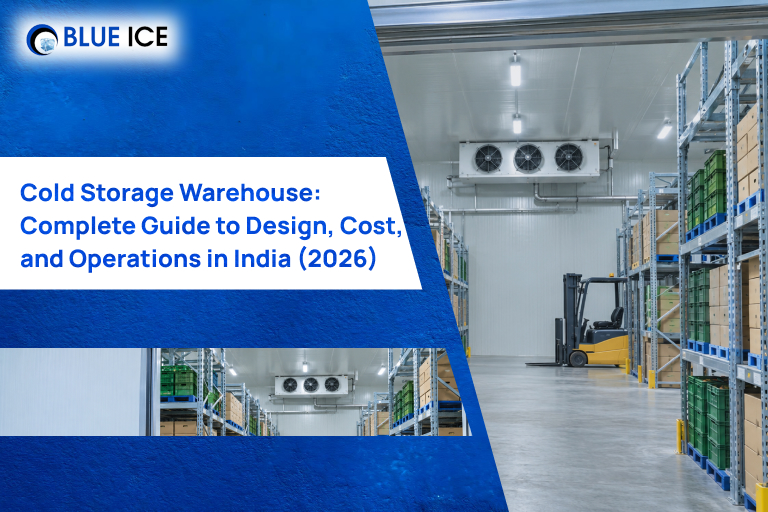
A cold storage warehouse keeps fruits, dairy, seeds, medicines, and frozen foods safe by holding them at the right temperature. For Indian businesses, it cuts spoilage, protects product quality, and opens the door to bigger markets.
Demand for cold chain facilities is growing as more farmers, food brands, and pharma companies want to store and move goods safely over longer distances. But building or choosing the right facility is not simple.
This guide explains design, cost, operations, and subsidies in simple words, so you can plan with confidence and avoid costly mistakes before you invest. Each section is practical and easy to follow.
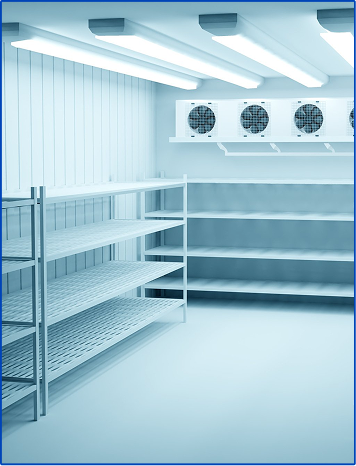
A regular warehouse only protects goods from rain, theft, and dust. A cold store must also control temperature and humidity day and night. It needs thick insulation, strong refrigeration, and backup power. This makes planning and running it a very different job.
Select a factor to see what to check.
Pick a site close to farms, factories, or highways so goods reach the facility quickly. Check power supply, water, and road access.
Decide capacity based on peak stock, not average stock. A multi commodity cold storage facility can serve several customers, which keeps the space busy all year.
A good layout lets forklifts and workers move without wasting time. Use racking to store goods vertically, and leave clear aisles for airflow and cleaning.
Keep separate chambers for products that need different temperatures, so one product never affects another.
PUF panels are the most common insulation for cold stores. They keep outside heat away and reduce the load on the compressors.
Freezer chambers need thicker panels than chiller chambers, and every joint must be sealed well.
The refrigeration system is the heart of the facility. Choose compressors, condensers, and evaporators that match your product and room size.
Digital controllers and alarms keep the temperature steady even when the weather changes.
Insulated, quick-closing doors and dock seals stop warm air from rushing in.
Fans and air curtains help cold air move evenly across every rack.
Good planning starts with the cooling load, not the equipment. Product type, daily stock movement, and local weather all change how much cooling you need, so guessing often leads to oversized or underpowered machines.
Not with the equipment.
What you store decides the temperature you need
How much goes in and out each day
Outside heat changes how hard the system works
The amount of cooling your facility really needs
Guessing often leads to oversized or underpowered machines.
Cost per square foot is not a fixed figure, because every project is different. Freezer chambers cost more than chiller chambers, and taller buildings with racking use land better. Ask for a detailed quotation instead of comparing one per-square-foot rate.
Small facilities need less money, but the cost per unit of storage is usually higher. Medium facilities balance cost and capacity well. Large facilities need the highest investment, yet they often give a lower cost per unit of storage over time.
Land, building type, panel thickness, refrigeration brand, automation, and power backup all change the final budget. A multi commodity cold storage warehouse with several temperature zones usually costs more than a single-temperature unit, but it can earn from many types of customers.
Electricity is usually the biggest running expense, since compressors work around the clock. Skilled labour and regular servicing add to the monthly budget. Good insulation and smart controls can bring these costs down over the years.
Use digital sensors and data loggers to track temperature and humidity round the clock. Phone alerts let your team act before goods get damaged.
Follow the first-in, first-out method, or first-expiry-first-out for sensitive goods. Label every pallet clearly and update stock records daily. This reduces waste, avoids stock-outs, and makes audits easier.
Check compressors, door gaskets, fans, and defrost systems on a fixed schedule. Train staff on safety, including what to do if someone gets locked inside a chamber.
Keep doors closed, avoid overloading chambers, and fix panel leaks quickly. LED lighting and efficient compressors also help. Small habits add up to big savings. Checking power bills every month also helps you spot problems early.
Written temperature logs and cleaning records build trust with customers and auditors. Many food and pharma buyers ask to see them before signing a contract.
Schemes to know, who can apply, and the steps to follow
Credit-linked, back-ended capital subsidy for cold storage projects
Supports post-harvest infrastructure
Supports post-harvest infrastructure
States may add their own support.
Most schemes ask for one.
Most schemes ask for these.
Most schemes need a loan sanction.
NHB, your state horticulture department, or your bank, as the scheme requires.
Check before you apply. Rules and rates change often, so confirm details on the official websites.
The National Horticulture Board offers a credit-linked, back-ended capital subsidy for cold storage projects. The Mission for Integrated Development of Horticulture and the Agriculture Infrastructure Fund also support post-harvest infrastructure. States may add their own support. Rules and rates change often, so check official websites before applying.
Farmers, FPOs, cooperatives, companies, and entrepreneurs are generally eligible. Most schemes need a detailed project report, land documents, and a bank loan sanction. Apply through NHB, your state horticulture department, or your bank, as the scheme requires.
ROI depends on how full your facility stays, the rent you charge, and your running costs. Divide your total investment by your yearly net earnings to estimate the payback period. A multi commodity cold storage setup often pays back faster because different products fill the space across seasons.
Blue Ice India designs and builds cold storage facilities for businesses across Gujarat. The team plans every project on real site experience, not just drawings. This practical knowledge helps avoid common mistakes in airflow, door placement, and power load.
Every business stores different products, so Blue Ice India plans each project around the product, volume, and growth plans. It can also design a multi commodity cold storage warehouse with separate chambers for each temperature.
Blue Ice India uses quality PUF panels and energy-efficient refrigeration systems to keep running costs low and temperatures steady.
From site survey and design to installation, one team handles the whole project. This saves time, keeps responsibility clear, and avoids confusion between different vendors.
A good facility starts with smart design, honest costing, and careful daily operations. Check subsidy options early, plan for energy savings, and choose a partner who supports you at every step. Start with your product list and expected stock, because every other decision follows from them.
Kalpesh Bhuva, CEO of Blue Ice India, brings over 25 years of expertise in refrigeration and cold chain solutions. He specializes in cold storage, modular cold rooms, multi commodity cold storage, ripening chambers, pharma facilities, and more. His vision focuses on innovation, quality, and advancing sustainable, locally manufactured cold storage technologies across India.

Queries
Not always. Ethylene-producing fruits like apples and bananas spoil sensitive produce like leafy greens, so they need separate chambers.
No. A cold storage racking system needs low-temperature-grade steel and anti-corrosion finishes to handle sub-zero conditions and condensation.
Yes. Chambers can be partitioned with PUF panels and given separate refrigeration, after checking floor strength and cooling capacity.
Yes. Schemes like NHB, MIDH and PMKSY, along with some state schemes, offer capital subsidies; check the latest guidelines before applying.