We are ISO certified
Cold Storage Company
We are ISO certified
Cold Storage Company
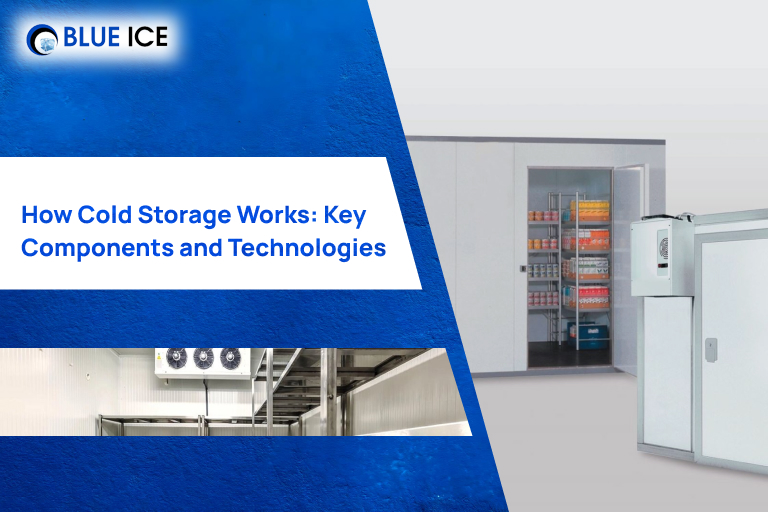
Learn about cold storage & how it keeps products and goods from going bad. This article discusses the cold storage business – its key components, advanced technologies and its role in enhancing cold storage facilities.
Find out how refrigeration systems work together with smart inventory management and how Blue Ice India sets the standard for innovative cold chain solutions.
At its core, cold storage is basically a special purpose system to preserve the perishable goods at an exact temperature and humidity.
From fresh produce and dairy to pharmaceuticals and seafood, cold storage protects these products from spoilage from production to consumption.
Cold storage provides infrastructure to prevent spoilage, extend shelf life and meet regulatory standards – an important infrastructure in agriculture, food processing and healthcare.
Cold storage warehouse demand has exploded because of e-commerce, global trade and consumer expectation of year round availability of perishables.
In India alone, poor cold storage contributes to 40-50% of fresh produce wastage every year – a cost of billions.
And efficient cold storage projects close this circle, making products like strawberries or vaccines available year round, and in any location.
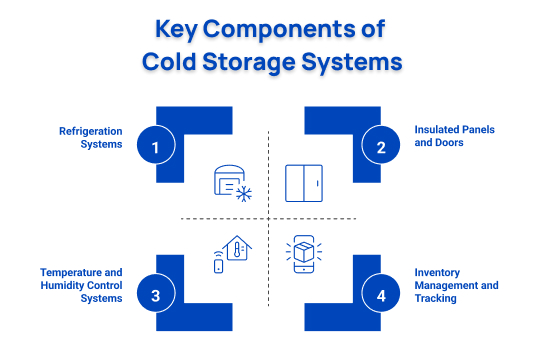
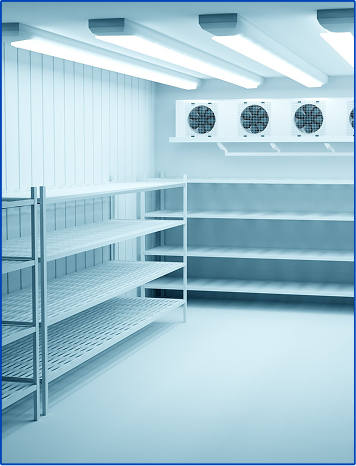
Refrigeration is at the heart of any cold storage facility. Compressor, condenser, evaporator and expansion valves all maintain precise temperatures – often -25°C for frozen goods to 4°C for chilled products like dairy or produce.
More advanced systems (as in Blue Ice India’s cold storage projects) use energy-efficient technologies to both cut OPEX and provide uniform cooling.
High quality insulation is vital for keeping temperature stability. Sandwich panels, generally produced of polyurethane foam (PUF) or even expanded polystyrene (EPS), create the wall space, ceilings, and floors of cool storage warehouses.
Airlock systems with high speed doors prevent temperature variations during product movement, reducing energy loss and making sure the chilly chain stays unchanged.
Maintaining optimum moisture is as essential as temperature control. Dehumidifiers and Advanced HVAC systems prevent ice or maybe mold formation, which may damage goods.
Real-time monitoring systems, built with sensors, offer immediate alerts whether conditions deviate, making sure product integrity in cool storage facilities.
In cold storage businesses inventory management is essential. Technologies such as: RFID, Barcode scanning, & Warehouse management software enable real-time tracking (which guarantees FIFO inventory rotation) to avoid spoilage.
Automated systems – stacker cranes & conveyors – simplify operations while reducing the human exposure to cold environments.
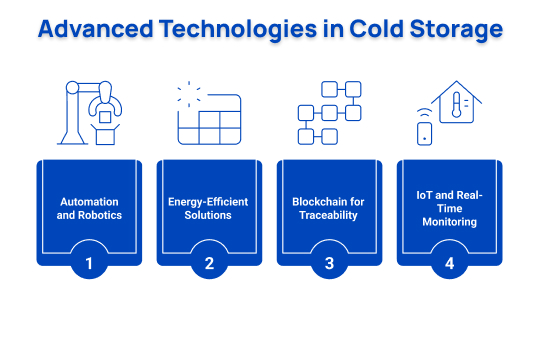
Automation is changing cold storage warehouses. Automated Storage and Retrieval Systems (AS/RS) use robotic cranes to store and retrieve goods reducing labour.
For instance, the fully automated 10,000-pallet ASRS warehouse in Gujarat by Indicold demonstrates how automation can increase capacities and accuracy of cold storage projects.
A big challenge in the cold storage business is energy consumption. Modern facilities use LED lighting, vacuum insulated panels and solar-powered battery systems.
Such solutions align with the global goal of net-zero carbon emissions in cold chains.
Blockchain is gaining ground in cold storage facilities because it provides traceability. Temperature, humidity and movement data are recorded in real time using blockchain to ensure transparency and safety standards compliance, especially for pharmaceuticals & food.
Devices that monitor cold storage warehouses 24 hours a day are called Internet of Things (IoT).
Temperature, humidity and equipment performance sensors send alerts about spoilage or system failures. So cold storage projects can keep product quality upstream of the supply chain.
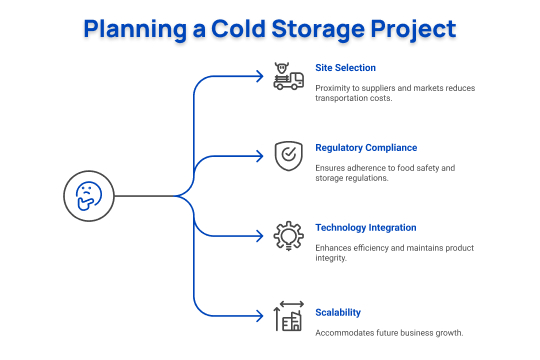
Before you start planning a cold storage project:
Well executed cold storage project ensures long term operational success and customer satisfaction.
Running a cold storage poses challenges ranging from high energy cost to regulatory compliance and perhaps most daunting, complicated inventory management.
Hot and humid regions in India’s diverse climate require heavy duty cooling to keep equipment efficient. Safety & environmental compliance is another level of complexity; Businesses have to invest in the infrastructure and the maintenance.
We at Blue Ice India have mastered cold chain solutions. In this article we saw how refrigeration, insulation, automation and smart monitoring combine to preserve perishable goods, reduce waste and optimize logistics.
Blue ice India is a cold storage company, which provides cold storage facilities to industries like Ice cream, pharmaceuticals and horticulture.
Want to change your supply chain? Reach out to find out how we are helping others preserve quality and increase efficiency in their cold storage project and applications.
Kalpesh Bhuva, CEO of Blue Ice India, brings over 25 years of expertise in refrigeration and cold chain solutions. He specializes in cold storage, modular cold rooms, multi commodity cold storage, ripening chambers, pharma facilities, and more. His vision focuses on innovation, quality, and advancing sustainable, locally manufactured cold storage technologies across India.

Queries