We are ISO certified
Cold Storage Company
We are ISO certified
Cold Storage Company
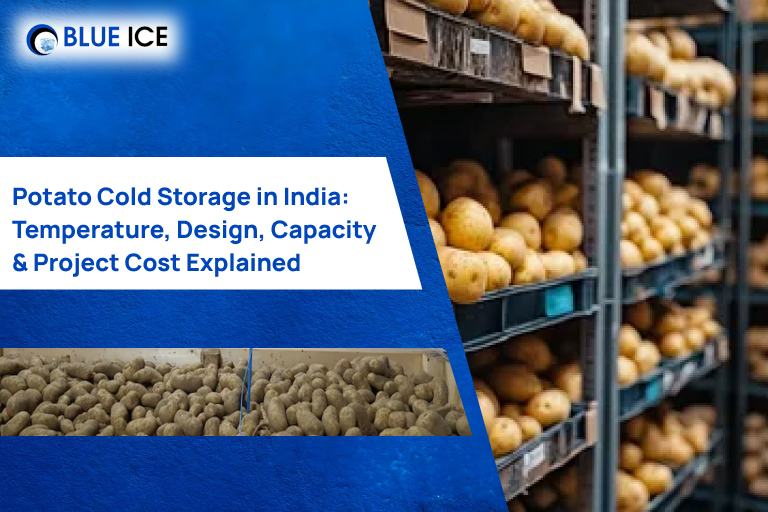
India produces over 55 million tonnes of potatoes annually, yet an estimated 20–25% is lost to post-harvest spoilage due to inadequate storage. For farmers, traders and processors, Potato cold storage is no longer a luxury; it is the single most impactful investment for protecting yield value and ensuring year-round supply.
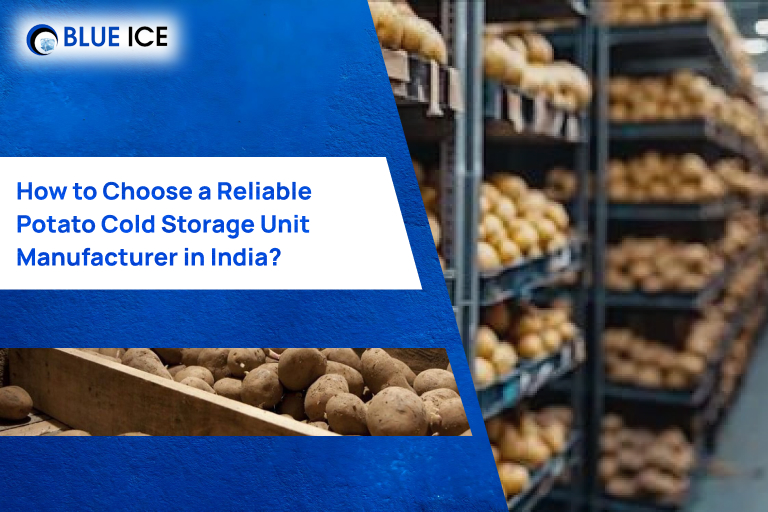
Potato cold storage refers to purpose-built, temperature- and humidity-controlled facilities that extend the usable life of potatoes well beyond their natural dormancy period. Unlike ambient warehouses, these facilities maintain precise environmental conditions to prevent sprouting, dehydration, microbial rot, and quality loss. Depending on the variety and end use — seed potatoes, table/fresh potatoes, processing potatoes for chips and fries, or sweet potatoes. the design and operating parameters differ significantly. Blue Ice India provides complete turnkey potato cold storage plant solutions tailored to each client’s capacity and crop requirements.
To understand the complete refrigeration process behind preserving potatoes, read our detailed guide on How Potato Cold Storage Works: A Step-by-Step Guide.
The single most important variable in potato storage temperature in cold storage is matching the variety and end-use to the correct temperature band. Storing table potatoes at seed-potato temperatures (too cold) can trigger starch-to-sugar conversion, causing undesirable browning in fried products. The table below summarises recommended parameters.
| Potato type | Temperature | Humidity (RH) | Shelf life |
| Seed potatoes | 2–4°C | 90–95% | 6–10 months |
| Table / fresh potatoes | 4–7°C | 90–95% | 4–8 months |
| Processing (chips/fries) | 8–10°C | 90–95% | 3–6 months |
| Sweet potatoes | 13–15°C | 85–90% | 4–7 months |
Maintaining relative humidity at 90–95% minimises weight loss (shrinkage) and supports skin suberisation after harvest. In India’s monsoon season, ambient humidity is already high — but uniform humidity inside the cold room is the challenge. Condensation from poor airflow management encourages fungal growth, so moisture control and ventilation must work together.
Potatoes produce metabolic heat and CO₂ during respiration. Without adequate air circulation, hot spots develop inside the pile, causing localised sprouting and rot. Well-designed air cooling units create uniform airflow across the entire stack, removing heat and gases continuously. In rural India, where power supply can be erratic, backup generator integration is an essential design consideration.
Even low-level light exposure causes greening (solanine accumulation) in tubers, affecting food safety and marketability. Storage chambers must be designed for complete darkness during the holding phase.
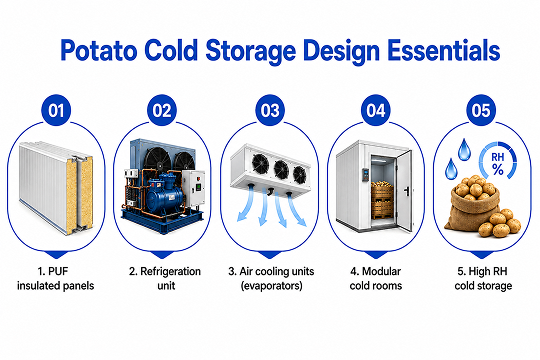
A well-engineered potato cold storage design integrates several subsystems. Key components include:
The potato cold storage project cost depends on capacity, location, civil construction complexity, and the technology selected. The following are indicative ranges only — actual costs vary considerably by site.
Key cost drivers are land (not included above), civil and structural construction, refrigeration equipment, electrical and DG set, and installation and commissioning. Ongoing operational costs — power, maintenance, labour — should be factored into the business plan.
Importantly, government schemes such as the National Horticulture Board (NHB) and NABARD-backed cold chain schemes offer capital subsidies for eligible potato cold storage projects. State-level agriculture departments in Uttar Pradesh, Gujarat, Punjab and West Bengal often have additional incentives. Consulting a project advisor early in the planning phase is recommended.
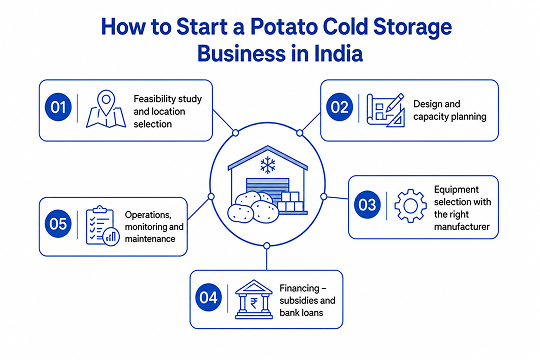
Blue Ice India‘s Project Consulting team can support clients through all five stages, from initial DPR preparation to commissioning and handover.
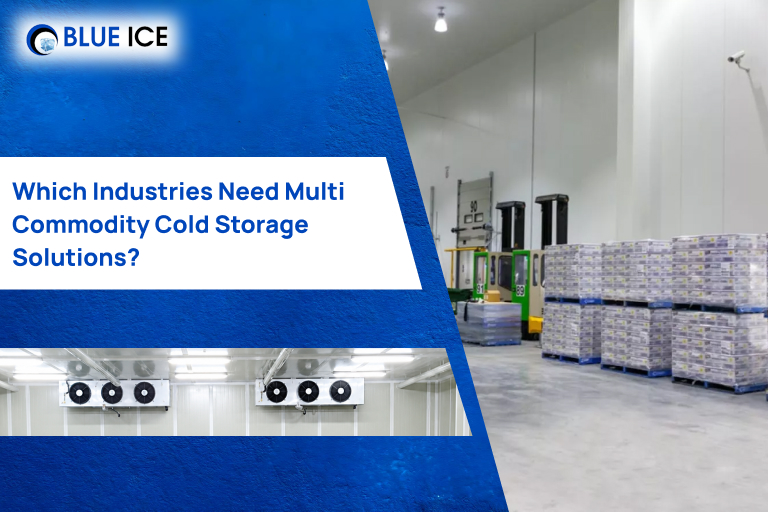
Blue Ice India is an ISO-certified cold storage manufacturer headquartered in Ahmedabad, Gujarat. The company designs and manufactures the full cold storage system in-house — PUF panels, refrigeration units, air cooling coils, and the complete structural assembly — and manages installation and after-sales support. Product specialisations directly relevant to potato storage include High Relative Humidity cold storage, Controlled Atmosphere Chambers (for extended dormancy of seed potatoes), and Multi-Commodity Cold Storage Warehouses for operations storing both potatoes and onions.
Investing in the right potato cold storage infrastructure is one of the most consequential decisions a farmer, trader, or agri-processor can make in India’s competitive produce market. From selecting the correct storage temperature for seed versus table versus processing potatoes, to designing a facility that maintains 90–95% relative humidity across India’s challenging seasonal conditions — every detail directly impacts profitability and shelf life. Whether you are evaluating a 500 MT facility or planning a large-scale 5,000 MT potato cold storage plant, the foundation of a successful project is an experienced manufacturing partner who can deliver on design, equipment quality, and long-term service support.
Blue Ice India brings together in-house manufacturing, ISO-certified processes, and end-to-end project execution to help you build a facility that performs reliably — season after season.
Kalpesh Bhuva, CEO of Blue Ice India, brings over 25 years of expertise in refrigeration and cold chain solutions. He specializes in cold storage, modular cold rooms, multi commodity cold storage, ripening chambers, pharma facilities, and more. His vision focuses on innovation, quality, and advancing sustainable, locally manufactured cold storage technologies across India.

Queries
A cold storage warehouse is a temperature-controlled facility used to store perishable products such as fruits, vegetables, dairy items, frozen foods, pharmaceuticals, meat, and seafood. By maintaining specific temperature and humidity conditions, these warehouses help preserve product quality, extend shelf life, and reduce spoilage throughout the supply chain.
Cold storage warehouses are essential for India’s agriculture, food processing, pharmaceutical, and logistics sectors. They help reduce post-harvest losses, maintain product freshness, support exports, and ensure year-round product availability. As demand for temperature-sensitive products continues to grow, cold storage infrastructure has become increasingly important across the country.
The cold storage warehouse cost in India depends on several factors, including the size of the facility, storage capacity, refrigeration requirements, insulation quality, location, and level of automation. Smaller facilities may require a modest investment, whereas large industrial cold storage projects can involve significantly higher capital expenditure. Costs typically include land acquisition, construction, refrigeration systems, insulation panels, electrical infrastructure, and operational setup.
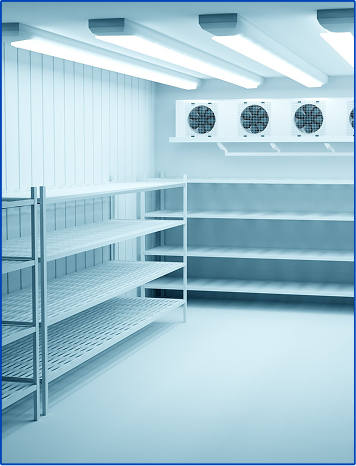
A cold storage warehouse is designed with a focus on temperature control, energy efficiency, and operational flow. The facility typically includes insulated wall and roof panels, vapor barriers, refrigeration systems, temperature monitoring equipment, storage racks, loading docks, and backup power systems. Proper airflow management and space utilization are also critical aspects of warehouse design.
Cold storage warehouses are widely used across industries that handle temperature-sensitive products. Agriculture, food processing, dairy, seafood, meat processing, pharmaceuticals, biotechnology, chemicals, retail, and e-commerce businesses all depend on cold storage facilities to maintain product integrity during storage and distribution.