We are ISO certified
 Cold Storage Company
We are ISO certified
Cold Storage Company
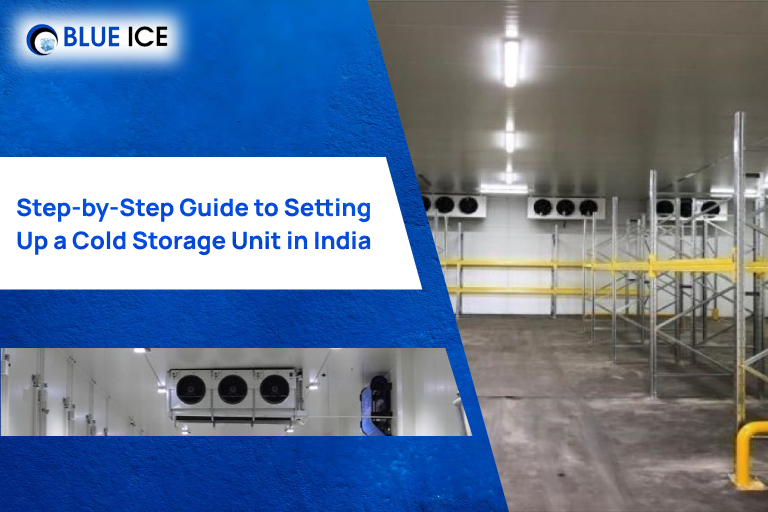
Step-by-Step Guide to Setting Up a Cold Storage Unit in India
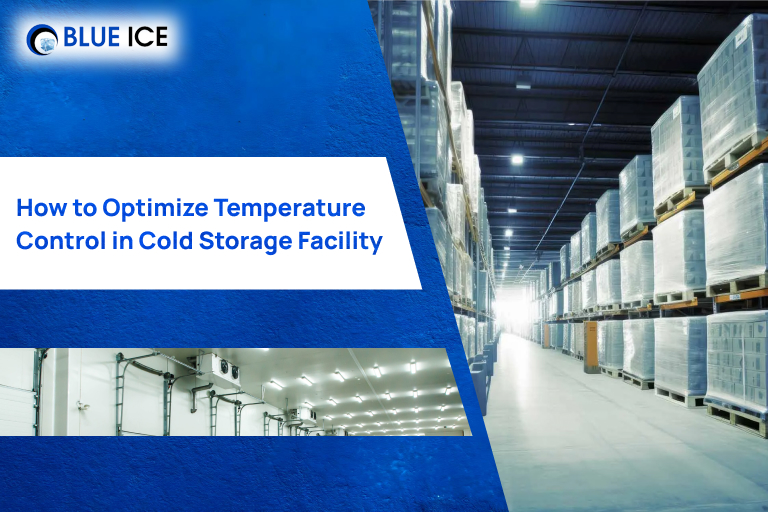
How to Optimize Temperature Control in Cold Storage Facility
Cold Room Maintenance Checklist to Improve Performance & Lifespan
Cold Room Door Specifications: Size, Thickness & Insulation Explained
What is the Ideal Cold Storage Temperature for Different Foods?
The healthcare industry in India is growing faster than ever, and so is the need for reliable cold storage solutions
From storing life-saving vaccines to temperature-sensitive biologics, pharma companies today cannot afford even a single storage failure.
As we move deeper into 2026, along with the demand for advanced cold storage solutions, the standards are also becoming more demanding.
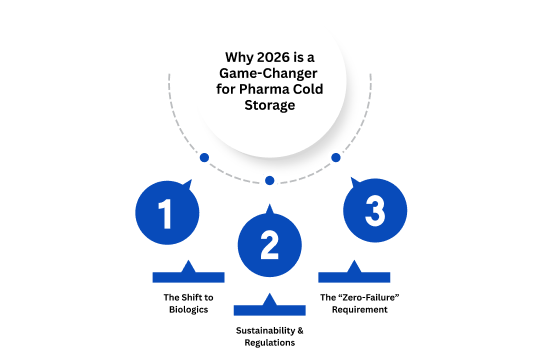 The Shift to Biologics
A major reason behind the growing need for proper cold storage solutions is the rapid rise of biologic medicines.
These include things like insulin, monoclonal antibodies, gene therapies and vaccines. Unlike traditional tablets, these products are extremely sensitive to temperature. Even a small deviation can make them effective or unsafe.
India’s pharma sector is investing heavily in biologics, which means the cold storage facility supporting these products must be built to handle ultra-precise temperature control, sometimes as low as -80°C.
In 2026, green storage is no longer optional. Regulatory bodies like the CDSCO and global standards such as WHO-GDP are pushing pharma companies toward energy-efficient, environmentally responsible cold storage projects.
Facilities are now being evaluated not just on performance but also on their carbon footprint. This is pushing cold storage manufacturers in Gujarat and across India to adopt natural refrigerants, solar-assisted cooling systems, and smart energy management.
In the Pharma cold storage, there is simply no room for error. A power outage, a sensor failure, or a door left ajar can result in crores worth of medicines being destroyed, or worse, harmful medicines can reach patients.
This “zero-failure” mindset is shaping how cold storage facilities are designed, monitored, and maintained in 2016.
Modern cold storage solutions India are increasingly powered by the Internet of Things (IoT). Sensors installed inside the storage rooms send real-time temperature and humidity data to cloud dashboards, which pharma managers can access from anywhere.
If the temperature drifts even slightly outside the set range, an automatic alert is triggered. This kind of continuous monitoring is now considered a baseline requirement for any serious cold storage facility.
One of the biggest causes of cold storage failure is equipment breakdown. To prevent equipment breakdowns, businesses follow a traditional maintenance schedule or perform maintenance only when there is an urgent need.
AI changes this scenario. By analysing data from compressors, fans and refrigeration units, AI systems can predict when a component is likely to fail and flag it before any damage occurs. This is becoming a standard feature in well-designed cold storage projects across India.
The shift toward environmentally friendly refrigerants like CO2 and ammonia is gaining serious momentum in 2026. These natural refrigerants have a much lower global warming potential compared to older HFC-based systems.
For pharma companies that need to comply with international export standards, green cold storage solutions are quickly becoming a necessity rather than a luxury.
Large pharma warehouses are now adopting automated storage and retrieval systems to handle inventory with speed and accuracy.
These systems of modern and multi commodity cold storage solutions reduce human entry into cold rooms, which helps maintain temperature integrity.
They also improve order accuracy and reduce the time medicines spend outside the controlled environment during picking and dispatch.
India’s cold chain has improved significantly, but the last-mile problem remains real. Getting temperature-sensitive medicines from a central cold storage facility to a rural clinic or a small pharmacy in a tier-3 town is still a challenge.
Poor road conditions, unreliable power supply, and limited refrigerated transport options all contribute to this gap.
Running a pharma-grade cold storage facility is expensive. The 24/7 working cooling systems can spike your electricity bills enormously.
Many cold storage operators in India struggle with high energy costs, especially in states where power supply is erratic.
This is pushing demand for solar-integrated systems and energy-efficient compressors of cold storage solutions that can deliver the same cooling at a lower cost per unit.
The regulatory landscape for pharma cold storage is tightening. Companies need to maintain detailed temperature logs, calibration records, and deviation reports. Inspections are becoming more rigorous.
Cold storage projects that are not designed with compliance in mind from day one often end up spending heavily on retrofits, whose cost can be easily avoided.
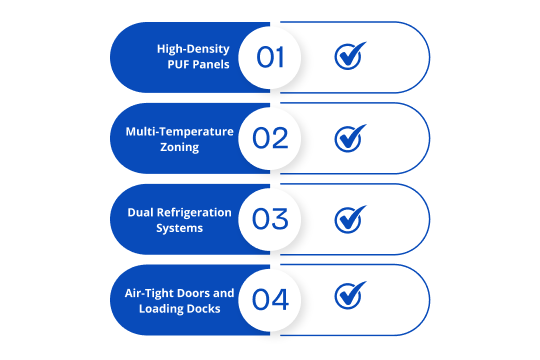 High-Density PUF Panels
Polyurethane foam (PUF) panels form the foundation of any goods cold storage room. High-density PUF panels offer superior insulation, which means the room loses less cold air and the refrigeration system has to work less hard. This directly impacts energy efficiency and temperature stability.
Different pharma products require different storage temperatures. A single-temperature cold room is not enough for a modern pharmaceutical warehouse.
Multi-temperature zoning allows a single cold storage solutions facility to maintain separate zones. For example, +2°C to +8°C for vaccines and -20°C for frozen biologics, all within the same room.
For pharma cold storage, redundancy is everything. Dual refrigeration systems of cold storage solutions ensure that if one unit fails, the backup unit starts to keep the room cool immediately.
This is particularly critical for high-value biologics and clinical samples where even a brief temperature excursion can be catastrophic.
Cold air loss during loading and unloading is one of the most common causes of temperature deviation. Air-tight doors with proper sealing gaskets, dock levellers and enclosed loading bays help maintain the cold chain integrity even during active movement of goods. A well-designed loading dock is just as important as the refrigeration itself.
At Blue Ice India, we have spent 25 years delivering cold storage solutions that India's pharma businesses rely on every day.
Based in Ahmedabad, we are a trusted cold storage manufacturer in Gujarat, and our work speaks for itself.
No two pharma businesses are the same, so we never offer a one-size-fits-all approach. Whether you need a modular cold room, a blast freezer, or a multi-temperature warehouse, we design every cold storage facility, around your specific requirements, including product range, compliance needs, and budget.
Our cold storage systems are built in line with WHO-GDP guidelines and CDSCO requirements. IoT monitoring, PUF panels, dual refrigeration, and air-tight loading systems come as standard, not extras.
With 2,500+ happy customers and 100+ industry awards, our track record is solid. Blue Ice India offers complete end-to-end support, from design and installation to commissioning and after-sales service.
When you choose us, you are not just buying cold storage solutions. You are choosing a partner committed to keeping your products safe and your operations compliant.
India's pharma sector is on an exciting growth trajectory, but that growth can only be sustained if the cold chain keeping these medicines safe works steadily.
The right cold storage solutions are not just a logistical requirement; they are a public health responsibility.
Whether you are setting up a new cold storage facility or upgrading an existing one to meet 2026 standards, the choices you make today will define the reliability and compliance of your operations for years to come.

Queries
Cold storage solutions are essential for the pharma industry because medicines, vaccines, insulin, and biologics require strict temperature control to remain safe and effective. Advanced cold storage facilities help maintain product quality, regulatory compliance, and uninterrupted cold chain operations across healthcare supply networks in India.
Pharma cold storage facilities typically maintain temperatures between +2°C to +8°C for vaccines and medicines, while biologics and clinical samples may require -20°C or even -80°C storage. Modern cold storage solutions use IoT monitoring and dual refrigeration systems to maintain precise temperature control continuously.
IoT technology improves pharmaceutical cold storage solutions by providing real-time temperature and humidity monitoring through cloud-connected sensors. These systems instantly alert operators about temperature deviations, reducing the risk of medicine spoilage and helping businesses maintain WHO-GDP and CDSCO compliance standards efficiently.
A modern pharma cold storage facility includes high-density PUF panels, multi-temperature zoning, dual refrigeration systems, airtight doors, IoT monitoring, and energy-efficient cooling systems. These features ensure temperature stability, reduced energy consumption, better inventory management, and safe storage for sensitive pharmaceutical products.
Energy-efficient cold storage solutions are becoming popular in 2026 because pharma companies want to reduce electricity costs and meet sustainability goals. Technologies like solar-assisted cooling, AI-powered maintenance, natural refrigerants, and smart compressors help businesses lower operational costs while maintaining reliable pharmaceutical storage conditions.
 +91-8866230337
 info@blueiceindia.com