We are ISO certified
 Cold Storage Company
We are ISO certified
Cold Storage Company

Cold Storage Solutions for Pharma and Health Care Industry in India 2026

Step-by-Step Guide to Setting Up a Cold Storage Unit in India

How to Optimize Temperature Control in Cold Storage Facility

Cold Room Maintenance Checklist to Improve Performance & Lifespan

Cold Room Door Specifications: Size, Thickness & Insulation Explained
When it comes to keeping food fresh, nutritious and safe, nothing is more important than maintaining an ideal cold storage temperature.
Whether you run a grocery shop, an ice cream parlour, a restaurant or you are a farmer, it is important to know what type of food items require what temperature range to stay edible. It reduces waste and also helps to maintain quality.
People often assume that “colder temperature is always better.” But this is not the case. Every food is different, so they also require a different set of temperatures, in order to avoid freezer burn, spoilage or loss in profits.
As we learn more about cold storage units, it becomes clear that accurate temperature control is essential to create a successful food supply chain.
In this guide, we will break down the ideal conditions for various food categories to help you manage the right location for a cold storage facility in the best possible way.
Food is an organic matter, so it continues to change even after it has been harvested and processed. How a particular food will react in its environment depends on various factors like moisture content, sugar levels and its ability to attract bacteria.
When you run a cold storage, your primary objective involves extending the shelf life of all stored products.
Microorganisms and enzymes spoil food because they are the main causes of food degradation. These microorganisms thrive in warmer temperatures.
So, if we keep the food at a lower temperature, these organisms go inactive and do not damage the food.
However, the temperature range to keep different foods fresh is also different. Tropical fruits can be damaged when kept in very low temperatures, whereas high-protein foods, like meat, would require freezing temperatures to prevent the growth of bacteria.
Understanding these temperature requirements is essential to guide those who want to operate a cold storage warehouse successfully.
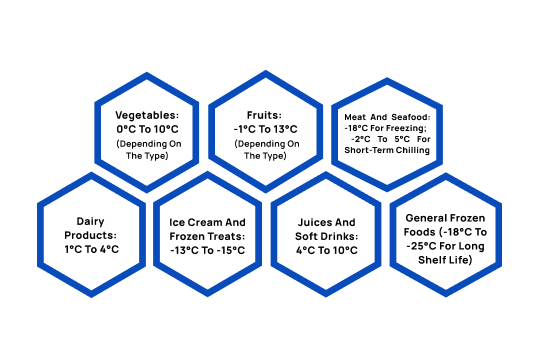
Managing your cold storage units properly ensures that all of your products will reach the consumer in perfect condition. Here is a quick reference guide of the ideal temperature range for different types of food:
The standard refrigerator produces a cool and humid environment, which is the best condition for most vegetables. Carrots, cabbage and leafy greens stay crisp at near-freezing temperatures (around 0°C).
But, on the other hand, vegetables like tomatoes, cucumbers and eggplants prefer slightly warmer conditions (7°C to 10°C).
Apples do very well in cold environments as low as -1°C, because this fruit is grown in colder regions. Conversely, tropical fruits like bananas and mangoes would lose their flavor or turn black if stored in a cold storage warehouse at very low temperatures. For them, the best temperature range is 10°C to 13°C.
In the cold storage business, the industry standard for long-term meat and fish preservation requires storage at -18°C to eliminate bacterial growth.
The optimal method for maintaining the texture and safety of fresh products that will be sold within three days requires storage at temperatures between -2°C and 5°C.
Milk, cheese and butter show sensitivity to changes in temperature. In the cold storage units, these products need to be stored within the temperature range of 1°C to 4°C because above this temperature range, these products start to sour.
Ice cream is a unique product. If the cold storage temperature gets too cold, it will become too hard to scoop.
If it gets too warm, it melts and develops ice crystals. -13°C to -15°C is the best temperature range for ice cream, where it maintains its smooth, creamy texture that customers love.
For beverages, a 4°C to 10°C temperature range is the best. It keeps the liquid safe and refreshing for consumption and also preserves its carbonation levels and nutritional value.
For any processed frozen goods, maintaining cold storage temperature below -18°C is essential if we want to store them for a longer time.
The temperature range protects the food's original taste while preventing moisture loss, which enables the product to retain its fresh taste for several months after packaging.
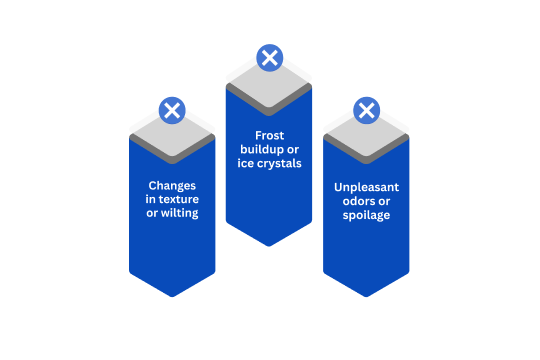
If your food products are degrading faster than expected, then your cold storage facility might be at fault. Here are the common signs that show that your cold storage system is not functioning properly:
When temperatures are too high: If your vegetables are turning yellowish and leaves are getting wilted, then you need to check your cold storage space.
High cold storage temperature speeds up respiration, which results in produce losing its fresh appearance and natural color.
A sign of temperature fluctuations: A temperature change is indicated by excessive frost development on your products and packaging.
The situation occurs for room cooling systems when the doors of cold storage warehouses and cold storage units remain open for extended periods and the cooling system fails to handle its operational requirements.
The result of bacterial growth: A bad smell is a clear signal that your storage temperature has entered the "danger zone." The combination of bacteria, yeast and mold multiply rapidly when the temperature of a cold storage warehouse is not kept low enough to stop their growth.
If you are looking to upgrade your current cold storage system or set up a new one, you need an experienced partner, like Blue Ice India, who understands all the technical demands of cold storage warehouse systems.
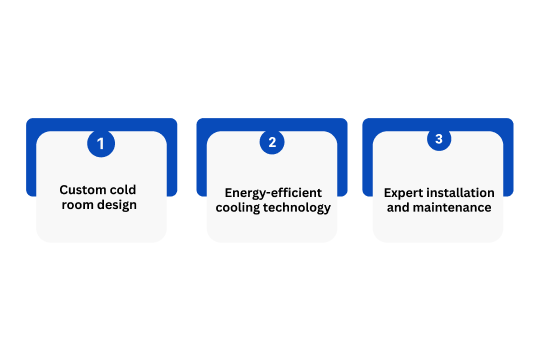
As a leading cold storage manufacturer in Gujarat, we provide custom solutions to businesses of all sizes so they can achieve maximum food safety and profitability in their operations. Here is how Blue Ice India provides its best services in the cold storage business:
We understand that every business has its unique requirements. Whether you need a large-scale industrial facility or a small walk-in chiller, our team of professionals designs a custom layout that utilizes the available space and ensures uniform cooling for all products.
Rising electricity costs are a major concern for any cold storage business. Our systems provide high-performance cooling, which consumes minimal energy. Blue Ice India helps you reduce your carbon footprint and also save on your monthly bills.
The safety of your inventory depends on how well your cold storage unit functions. Our expert technicians provide professional installation, ensuring that every panel and compressor is functioning perfectly. We also offer continuous maintenance services, so that your facility remains operational 24/7.
Temperature control is not just a technology; it is the most important factor in the food storage industry. By maintaining the ideal cold storage temperature for your specific products, you can significantly preserve quality, reduce waste and build trust with your customers.
Whether you are freezing food for a long time or storing fresh produce, choosing the best cold storage facility makes all the difference.
Are you prepared to enhance your storage capabilities through advanced solutions? Your inventory requirements deserve the best available storage solutions.
Our company provides complete support for your business through our premium cold storage units and our full facility management services.
The Blue Ice India experts will assist you in creating an ideal cold storage facility for your business needs.

Queries
The ideal cold storage temperature depends on the type of food. Fresh vegetables are usually stored between 0°C and 10°C, dairy products at 1°C to 4°C, while frozen foods require temperatures below -18°C to maintain quality and prevent bacterial growth.
Maintaining the right temperature helps slow down bacterial growth, preserves nutrients, and extends the shelf life of food. Proper cold storage also prevents spoilage, reduces food waste, and ensures food safety.
For long-term preservation, meat and seafood should be stored at around -18°C. For short-term storage, a temperature range of -2°C to 5°C is recommended to maintain freshness and prevent bacterial growth.
Most vegetables stay fresh between 0°C and 10°C, while fruits require temperatures ranging from -1°C to 13°C depending on the variety. Tropical fruits like bananas and mangoes should be stored at slightly warmer temperatures.
Improper temperature control can cause food spoilage, frost buildup, texture changes, and bacterial growth. Consistent cold storage temperatures are essential to maintain food quality, safety, and shelf life.
 +91-8866230337
 info@blueiceindia.com