We are ISO certified
 Cold Storage Company
We are ISO certified
Cold Storage Company
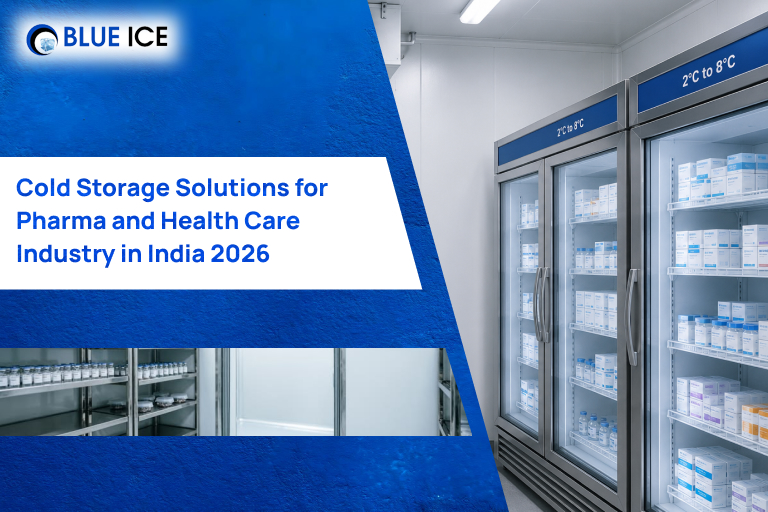
Cold Storage Solutions for Pharma and Health Care Industry in India 2026
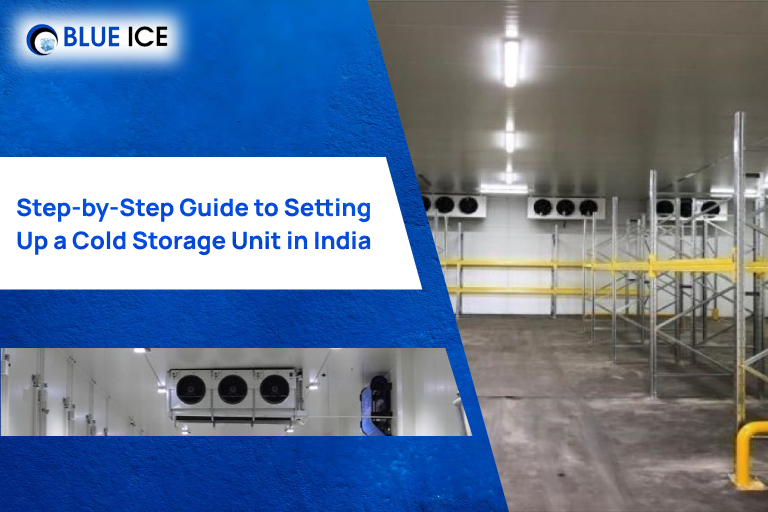
Step-by-Step Guide to Setting Up a Cold Storage Unit in India
How to Optimize Temperature Control in Cold Storage Facility
Cold Room Maintenance Checklist to Improve Performance & Lifespan
Cold Room Door Specifications: Size, Thickness & Insulation Explained
In cold storage energy efficiency is a must. Rising energy costs & tighter regulations drive the industry towards smarter & leaner refrigeration infrastructure.
Where electricity accounts for up to 70% of operating costs, a shift towards sustainable, high-efficiency infrastructure is a financial necessity, not an environmental one.
In this guide, you will learn how high-performance insulation, variable frequency drives, and smart automation make cold storage a consistently profitable asset.
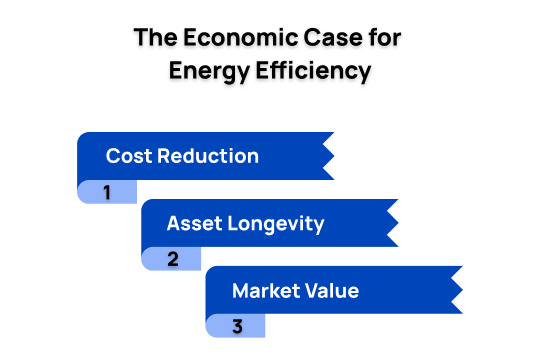
For investors and operators, the daily cost per pallet position determines whether a cold storage business is viable. High utility bills were traditionally considered an inevitable fixed cost, but new market data challenge that assumption.
With the Indian cold chain market expected to grow at a CAGR of more than 10% through 2034, competition is intensifying, and margins will be favorable for those optimising energy consumption.
A streamlined facility protects the bottom line from fluctuating grid tariffs and potential carbon taxes.
Any cold storage facility's efficiency is determined before the first compressor starts running. Thermal leakage kills profitability by making refrigeration units work overtime to prevent heat gain. Almost all major cold room manufacturers in India have adopted high-density PUF panels as their barrier against ambient heat. And unlike traditional masonry or lower-grade foams, modern PUF panels use cam-lock to create a hermetic seal, turning the cold room into a sealed thermal vault.
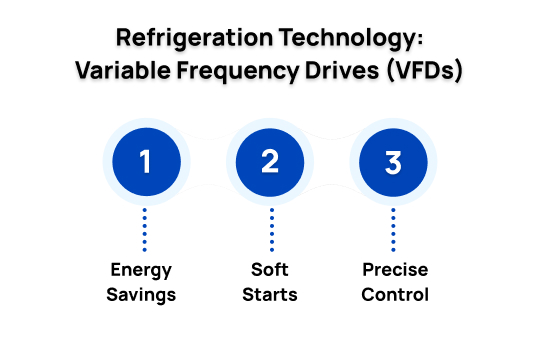
The compressor is the heart of cold storage solutions, but traditional fixed-speed compressors are inefficient. These run at 100% capacity until the target temperature is reached and then completely shut down - they are in a binary state.
This "stop-start cycle" creates tremendous inrush currents and thermal variations. The solution is Variable Frequency Drives (VFDs), intelligent throttles for refrigeration motors. VFDs save energy by synchronising the motor speed with the needed cooling load at each instant.
Rather than "one size fits all," a robust cold storage business plan should consider the thermal requirements of each commodity.
Zoning/compartmentalisation allows the treatment of different products with different cooling protocols. For instance, storing potatoes requires high humidity and moderate cold storage (7 degrees Celsius), whereas ice cream needs a deep freeze (-25 degrees Celsius) with low humidity.
Besides, airflow management is often undervalued; Bad stacking patterns block air circulation and create "hot spots" that cause the operator to overcool the room just to protect a few pallets.
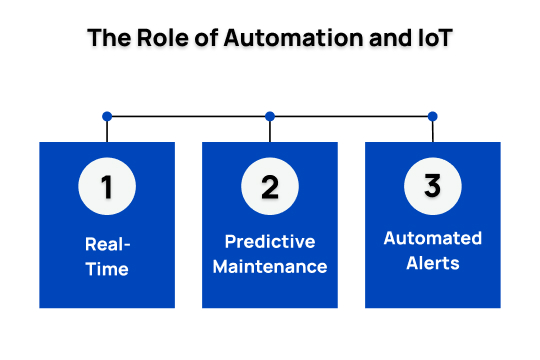
The cold storage solutions for the different industries are data-driven. Automatic temperature loggers are being replaced by sensors that monitor the facility's health 24 hours a day.
Such smart systems provide detailed visibility of operations and pick up anomalies that a human would not see until it is too late. Predictive analytics may show that one valve is sticking or that a door is left open too often - so managers can intervene before energy or product is lost.
To enter or expand into the market, you need a long-term view of energy dynamics. No longer just a cooling unit, innovative cold storage solutions go beyond that. Facilities are utilising "waste heat recovery" systems that capture heat rejected by refrigeration and use it to produce hot water for cleaning or defrosting.
Moreover, the large, flat roof area of a typical cold storage warehouse can be used for solar power generation in accordance with the industry energy demand profile - cooling needs are greatest when the sun shines brightest.
Transitioning to energy-efficient cold storage is a paradigm shift in the logistics industry. A market that demands precision and efficiency cannot afford to use an old, power-hungry infrastructure.
High-density PUF insulation, intelligent VFD technology and proactive automation allow operators to build robust, profitable and sustainable facilities.
At Blue Ice India we design cold storage infrastructure that drives profitability. We are among India's leading cold room manufacturers, executing complete refrigeration projects with a focus on energy performance and operational resilience.
Whether developing a new cold storage facility or modernising an existing one, our engineering team delivers commercially minded solutions.
Get in touch with us today to talk about how we can future-proof your cold chain operations.

Queries
Energy-efficient cold storage uses advanced insulation, variable frequency drives (VFDs), smart automation, and optimized refrigeration systems to reduce power consumption while maintaining precise temperature control.
An energy-efficient cold storage facility can reduce electricity consumption by 20–30% compared to conventional systems, significantly lowering operating costs and improving long-term profitability.
PUF panels are used because of their low thermal conductivity (≈0.023 W/mK), excellent air tightness, and durability, which minimize heat gain and reduce compressor runtime.
VFDs regulate compressor and fan motor speeds based on real-time cooling demand, reducing power spikes, improving temperature stability, and saving 10–25% energy during partial loads.
Yes, Although initial costs are higher, energy-efficient cold storage delivers lower operating expenses, longer equipment life, better regulatory compliance, and faster ROI making it a smart long-term investment.
 +91-8866230337
 info@blueiceindia.com