We are ISO certified
Cold Storage Company
We are ISO certified
Cold Storage Company
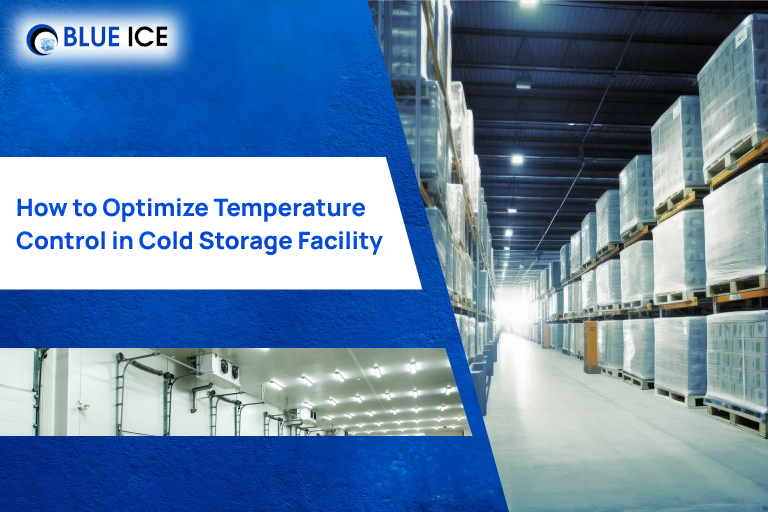
Keeping a cold storage facility up to the mark isn’t just good practice. It’s what stands between your inventory and a significant loss you might face.
Whether you’re storing fresh produce, dairy, or sensitive pharmaceuticals, even a minor temperature change can result in product loss and high energy consumption.
But real optimisation means much more than lowering the thermostat. It’s about building a smart ecosystem where your equipment, insulation, and organisation genuinely work together.
This guide walks you through practical, straightforward steps to keep your cooling consistent, your products protected, and your energy bills under control.
A very basic thing in a cold storage facility is that it doesn’t matter how powerful your cooling system is if the cold air isn’t staying inside. Think of your facility like a giant thermos: any crack or gap means the temperature inside starts to go up faster than it should.
Your walls are your first line of defence against outside heat. High-quality PUF (Polyurethane Foam) panels do a great job of blocking thermal transfer, but they aren’t foolproof.
Over time, panels can shift, settle, or take minor damage that affects their ability to trap the cold air inside.
Make it a habit to inspect your walls for signs that signal loss in cold air and gain of warm air, like sweating surfaces or unexpected frost buildup.
If cold air is leaking through a joint, reseal it completely because it will help you to protect the overall performance of your cold storage units.
During cold storage services, we often forget to check the rubber seals around doors, known as gaskets. But they’re usually where facilities lose the most energy.
Constant use of doors causes rubber seals to crack, stiffen, or simply stop gripping properly. Even a modest gap functions like a permanently open window.
A monthly gasket check takes minutes but can save thousands in unnecessary energy costs. If a seal feels brittle or looks torn, replace it without delay.
Every time a door swings open, warm, humid air floods in and cold air escapes, and the efficiency of your cooling system decreases.
Installing high-speed doors or PVC strip curtains adds a practical secondary barrier that significantly reduces this exchange of warm and cold air.
Even during active loading, these solutions help your cold storage facility hold its temperature without putting extra strain on your equipment.
A cold storage manufacturer builds systems to last, but like any machine, they require regular “health checks” to run efficiently.
Dirty coils are one of the most common and overlooked efficiency killers. When dust and debris settle on your coils, they stop releasing the heat properly.
As a result, your compressor ends up working harder and longer than it should. Something as straightforward as cleaning your coils twice a year can make a noticeable difference in both performance and energy consumption.
Low refrigerant levels could increase the temperature. If a system is leaking cold air, then it won’t just fail to cool, but it will eventually burn out the motor.
It’s worth scheduling regular professional checks to confirm there are no slow leaks in your
cold storage facility.
Catching this early is far less disruptive and costly than dealing with a full system failure.
Sometimes the equipment itself is running fine, but the readings it gives you are off. A sensor showing 4°C when the room is actually 7°C is a silent problem that you won’t be able to see.
But it’s the one that could compromise your inventory without any obvious warning signs.
Periodically cross-checking your wall sensors with an independent handheld thermometer is a simple habit that keeps your data true and the cold storage warehouse genuinely safe.
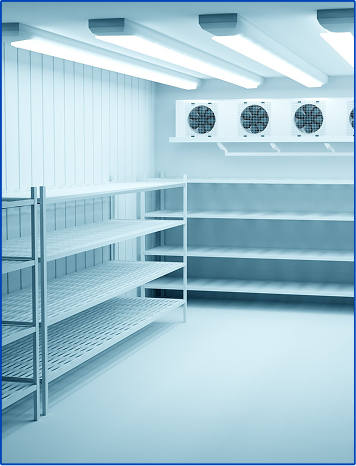
Your cooling system will not work if the air it produces has no place to move around the products. Proper stock organisation is important because it helps the cold air to move and create a uniform temperature inside the warehouse.
It might seem like wasted space, but keeping at least a 12-inch gap between your stock and the walls or ceiling is essential.
Cold air needs a clear path to travel and circulate behind your pallets. Without it, you end up with hot spots, pockets of warmer air where products are quietly deteriorating while your thermostat reads normal.
Packing a cold storage facility high up to the ceiling close to the fans is understandable from a space perspective, but it also decreases the efficiency of your system.
When stock blocks your evaporator fans, cold air clusters near the unit while the back of the room gradually warms up. A well-run facility always leaves enough room for air to move freely between rows.
Pallets and vented shelving are the best solutions here. By staggering your stock and leaving small channels between rows, you essentially create natural wind tunnels that push cold air deep into the middle of each stack.
It costs nothing to implement and can meaningfully improve temperature uniformity across your entire facility.
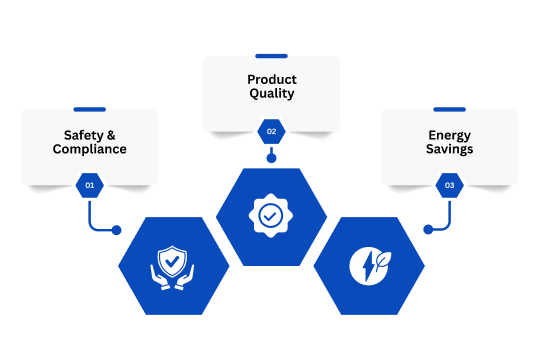
Maintaining a cold storage facility well isn’t just about meeting technical standards. It is also a genuine business strategy.
In food and medical storage, there’s simply no margin for error. Consistent temperature control keeps you aligned with safety regulations, meaning you will pass audits and stay within legal safety limits.
Consistent cold storage temperature preserves the texture, nutritional value, and overall integrity of your products. Your customers receive what they paid for, which also builds trust.
A well-optimised facility doesn’t need to run its compressors 24/7. When your insulation and airflow are working properly together, your energy consumption reduces significantly.
Optimising an existing setup is great, but sometimes the smartest move is bringing in the right expertise to reach the highest level of efficiency.
Blue Ice India is a trusted cold storage manufacturer with a strong track record of helping businesses build and upgrade cold storage facilities that are built to last.
Whether you’re starting a new cold storage plant from scratch or looking to modernise your existing setup with energy-efficient technology, our team brings the knowledge and equipment to make it happen.
From premium PUF panels to advanced refrigeration monitoring systems, we design everything while keeping the future in mind.
Optimising a cold storage facility is never a one-time task. It’s an ongoing commitment to monitoring, maintaining, and refining. But the payoff is real.
Staying on top of the small details, from door gaskets to airflow gaps, adds up to meaningful savings and better-protected inventory over time.
So make sure you take all the logical steps that will help you create and run an effective Blue Ice India cold storage facility. It is a simple way to run a stress-free business and maximize your profit.
Kalpesh Bhuva, CEO of Blue Ice India, brings over 25 years of expertise in refrigeration and cold chain solutions. He specializes in cold storage, modular cold rooms, multi commodity cold storage, ripening chambers, pharma facilities, and more. His vision focuses on innovation, quality, and advancing sustainable, locally manufactured cold storage technologies across India.

Queries
Temperature control is essential to prevent product spoilage, maintain quality, and ensure compliance with food and pharmaceutical safety standards. Even small fluctuations can lead to significant losses.
High-quality insulation like PUF panels reduces heat transfer, helping maintain consistent internal temperatures and lowering energy consumption in your cold storage facility.
Routine maintenance, including cleaning coils and checking refrigerant levels, should be done at least twice a year, along with regular inspections for optimal performance.
Maintain proper spacing (like the 12-inch rule), avoid overloading, and use staggered stacking to ensure smooth airflow and uniform cooling across all stored products.
Improving insulation, minimizing door openings, maintaining equipment, and ensuring proper airflow can significantly reduce energy consumption and operating costs.